The Paint Finish
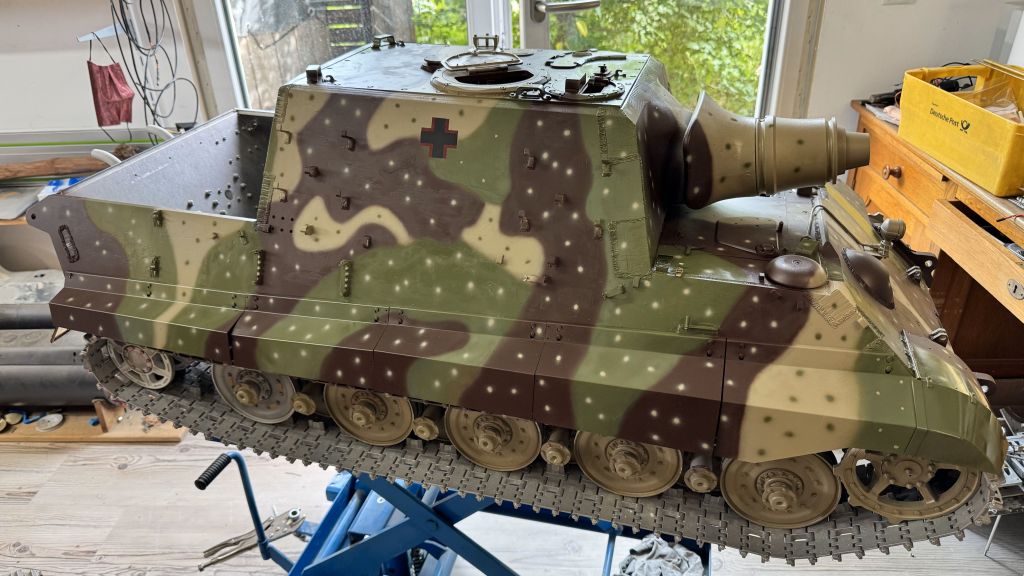
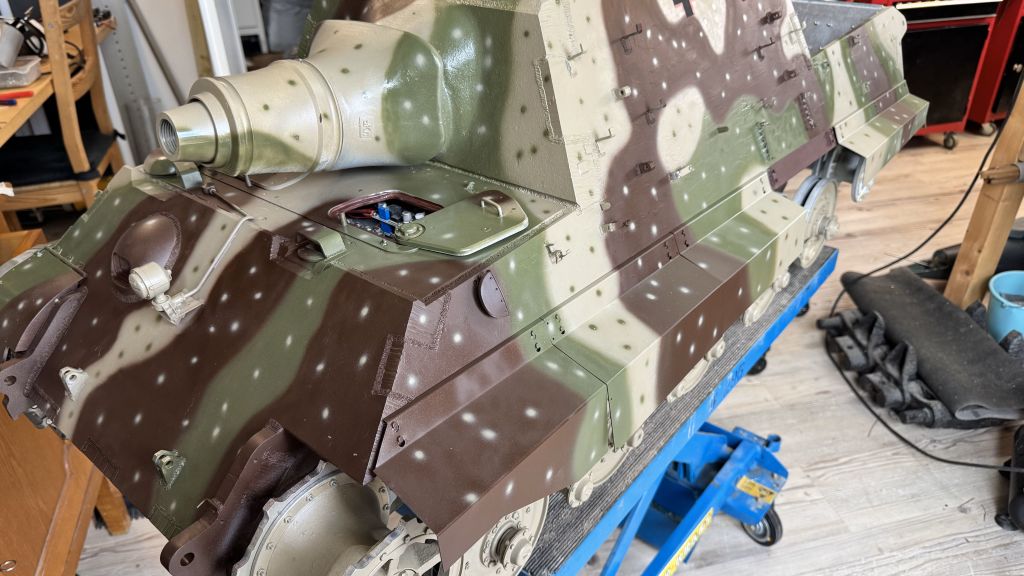
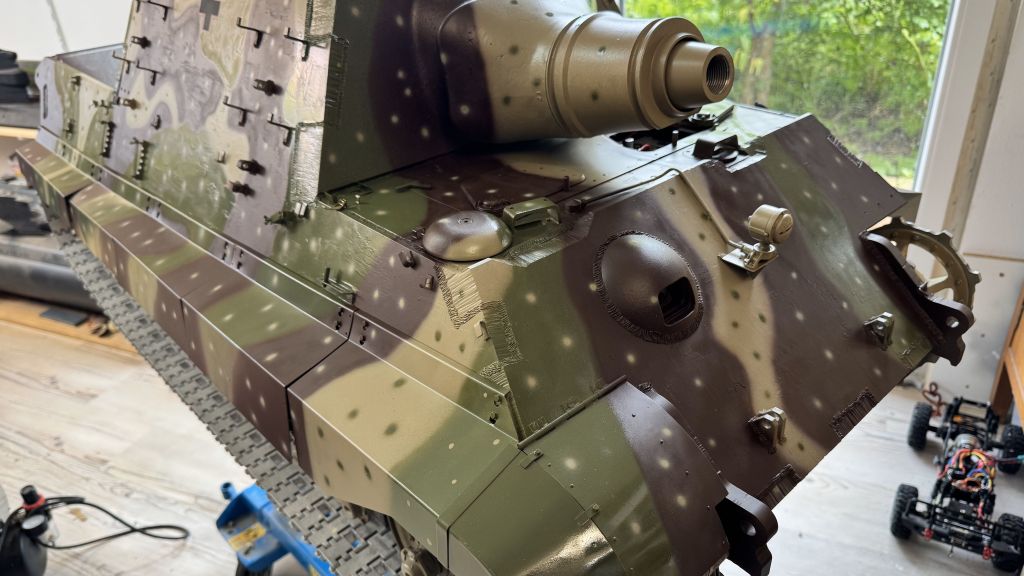
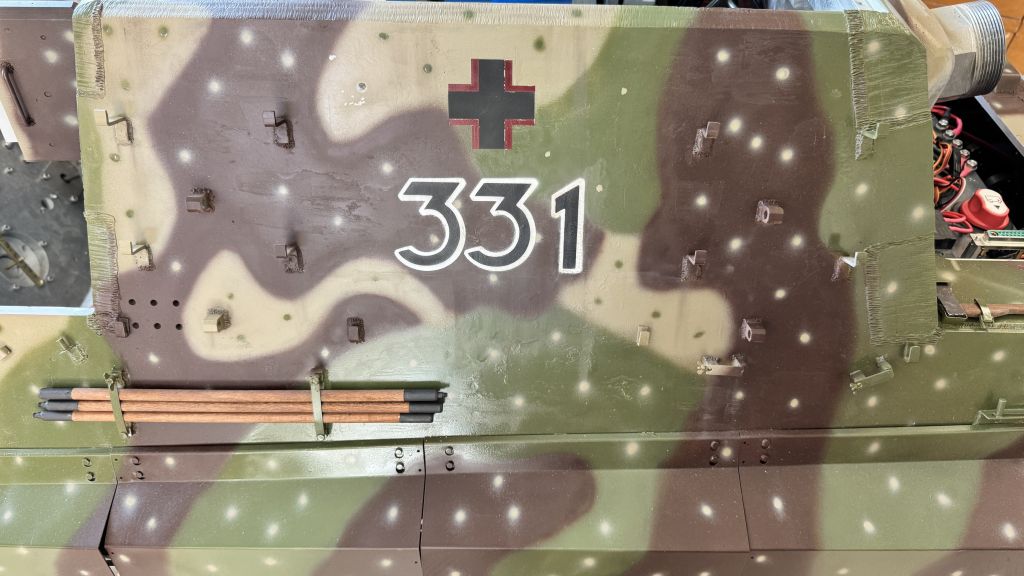
Reconstructing the historical three-colour camouflage finish of Jagdtiger 331 in 1:6 scale.
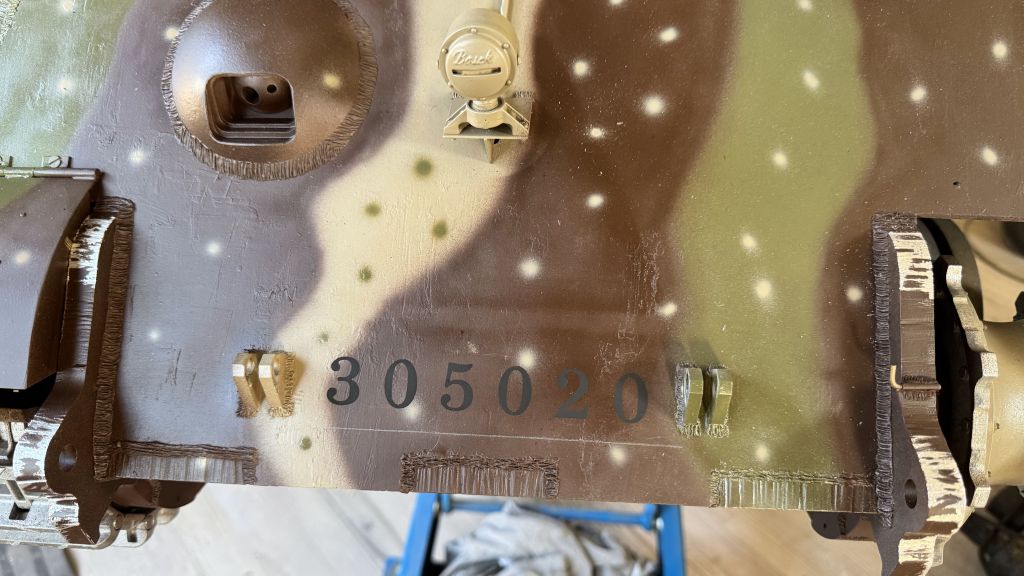
Reconstructing the camouflage pattern
One of the most difficult aspects of recreating vehicles from the Second World War is the paint finish. Since almost all surviving photographs are black and white, accurately reproducing the original camouflage pattern on a model is extremely difficult. In many cases, only a few photographs taken from different angles exist, and the camouflage pattern is not always clearly visible. Photographs of other vehicles from the same unit or tanks with similar camouflage can be helpful.
In the case of Jagdtiger 331, the historically inaccurate term “ambush camouflage” is often used. The contemporary documented designation, however, is “three-colour camouflage finish” (3-Farben-Buntanstrich).
The mystery of “Dunkelgelb”
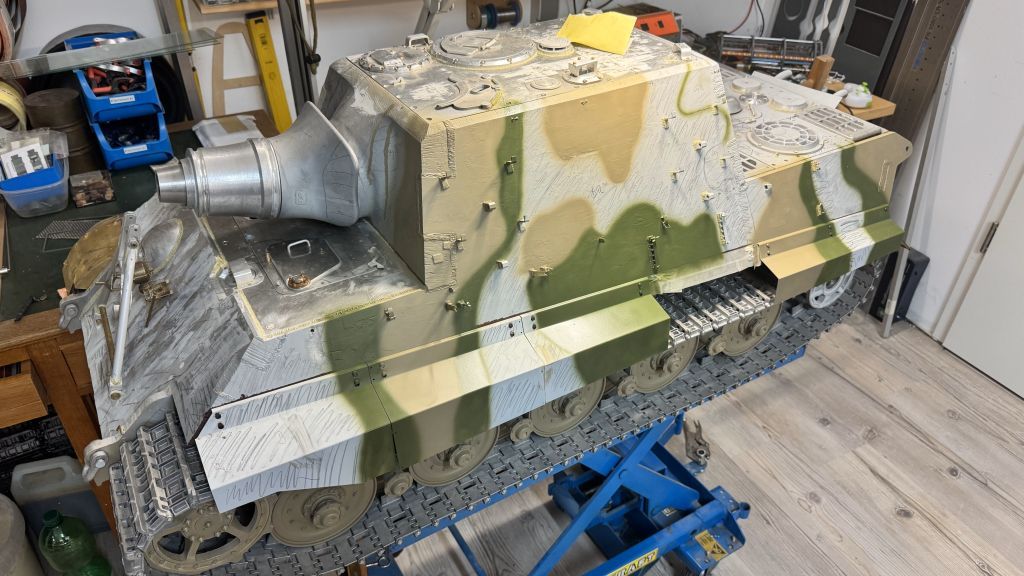
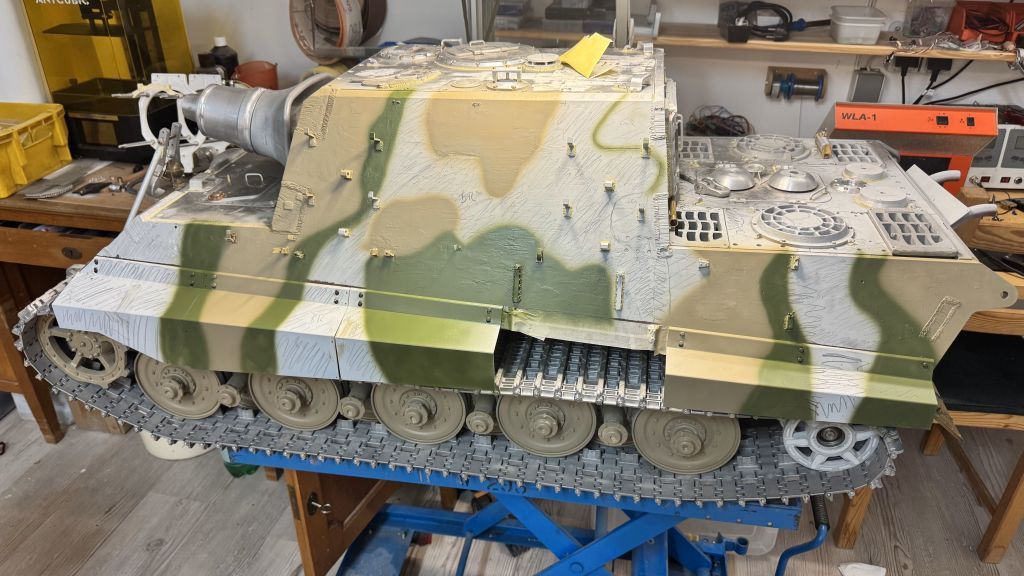
Army Bulletin No. 181 of 1943 introduced and prescribed a new multicolour paint scheme for army vehicles and guns. This involved a significantly lighter and more yellowish variation of the original Dunkelgelb.
In March 1944, the Dunkelgelb sample was revised once again, giving it a slight reddish tint. The RAL number remained unchanged. This shade was used for new paint finishes until autumn 1944 and is now documented by numerous surviving original paint samples.
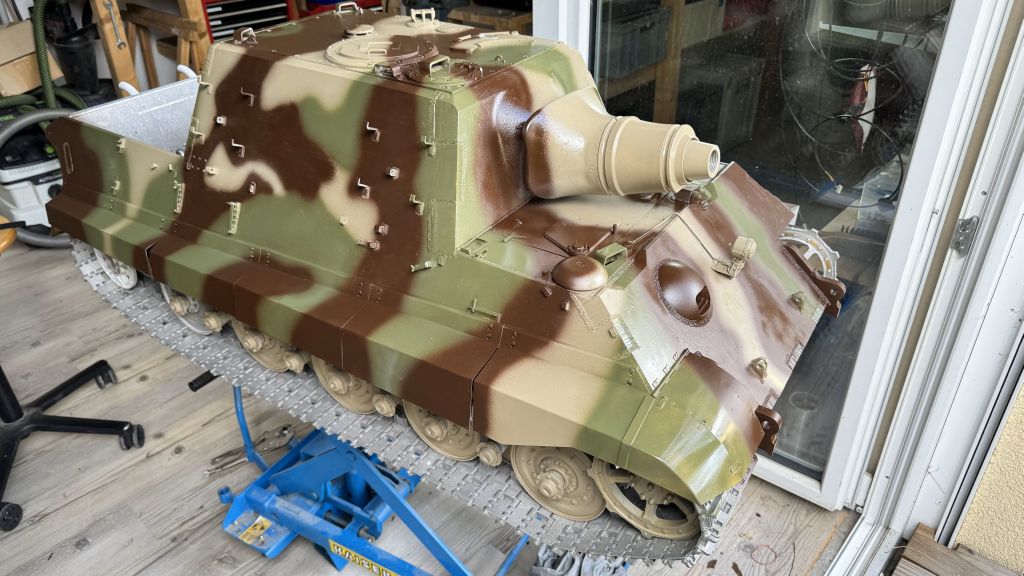
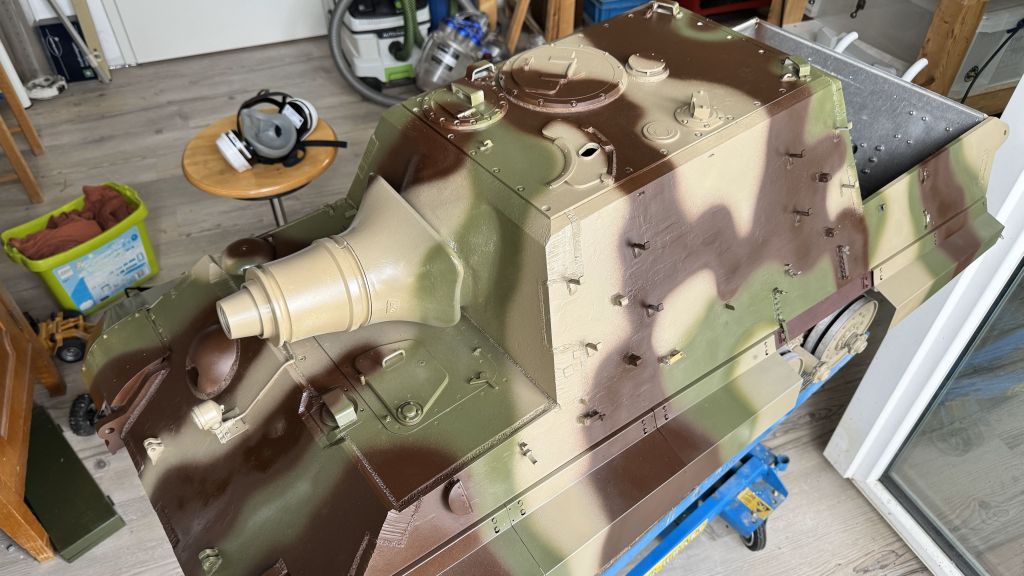
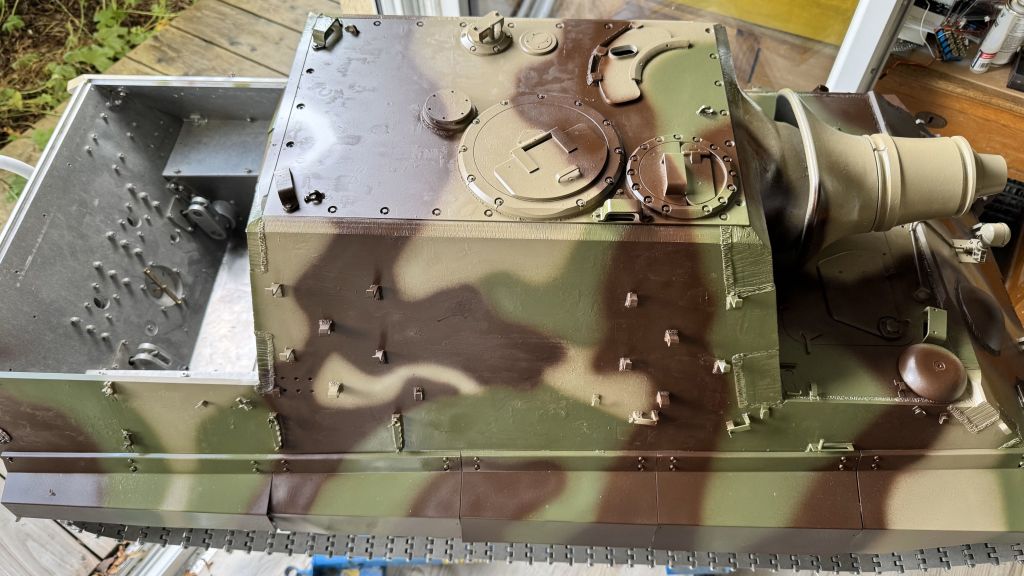
Paint layers and colours
RAL 7028 Dunkelgelb, 1944 version, was applied at the factory over the red oxide protective primer. The camouflage pattern was then sprayed on.
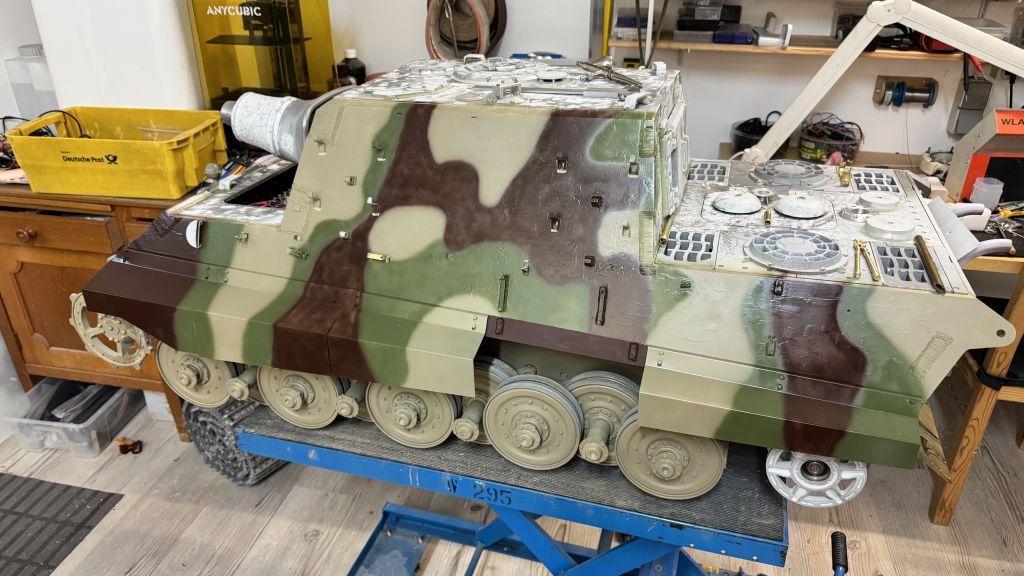
Choosing the paints is just as difficult as interpreting the camouflage pattern itself. I decided to use paints from “Militärlacke.de”. To my eye, their rendering of the base shade “RAL 7028 Dunkelgelb, 1944 version” is convincing and historically accurate. This shade forms the base coat.
For the camouflage patches, I use RAL 8017 Rotbraun and RAL 6003 Olivgrün. The pattern on the left and right sides could be reconstructed fairly well from original photographs, whereas little can be made out on the front. No photographs of the rear, engine deck or fighting-compartment roof are currently known. In these areas, the pattern can only be approximated from the transitions along the edges. Comparative photographs of other vehicles are again helpful.