Jagdtiger in Color
Historical Photographs and AI-Assisted Colorization
In recent years, artificial intelligence has advanced considerably. Historical black-and-white photographs can now be realistically colorized and enhanced, making details and structures more visible. Nevertheless, these edits remain interpretations. In blurred, damaged or underexposed photographs, and in complex camouflage patterns, colors, contours and details cannot always be reconstructed unambiguously. The colorized versions are therefore visual approximations, not historically verified evidence of color.
IMPORTANT NOTICE
Many image descriptions are also based on assumptions. Proposed dates and sequences are partly derived from lighting, vegetation, vehicle condition and known photographic locations. Where primary sources are missing, these attributions cannot be established beyond doubt.
The Scene on Landauer Straße
The first series shows the two abandoned Jagdtigers 331 and 323. The photographs were taken on March 23, 1945, by members of the U.S. Army Signal Corps, probably around midday. Both vehicles apparently remain near their original positions. Remnants of camouflage materials and equipment are visible; individual items are missing in later photographs.
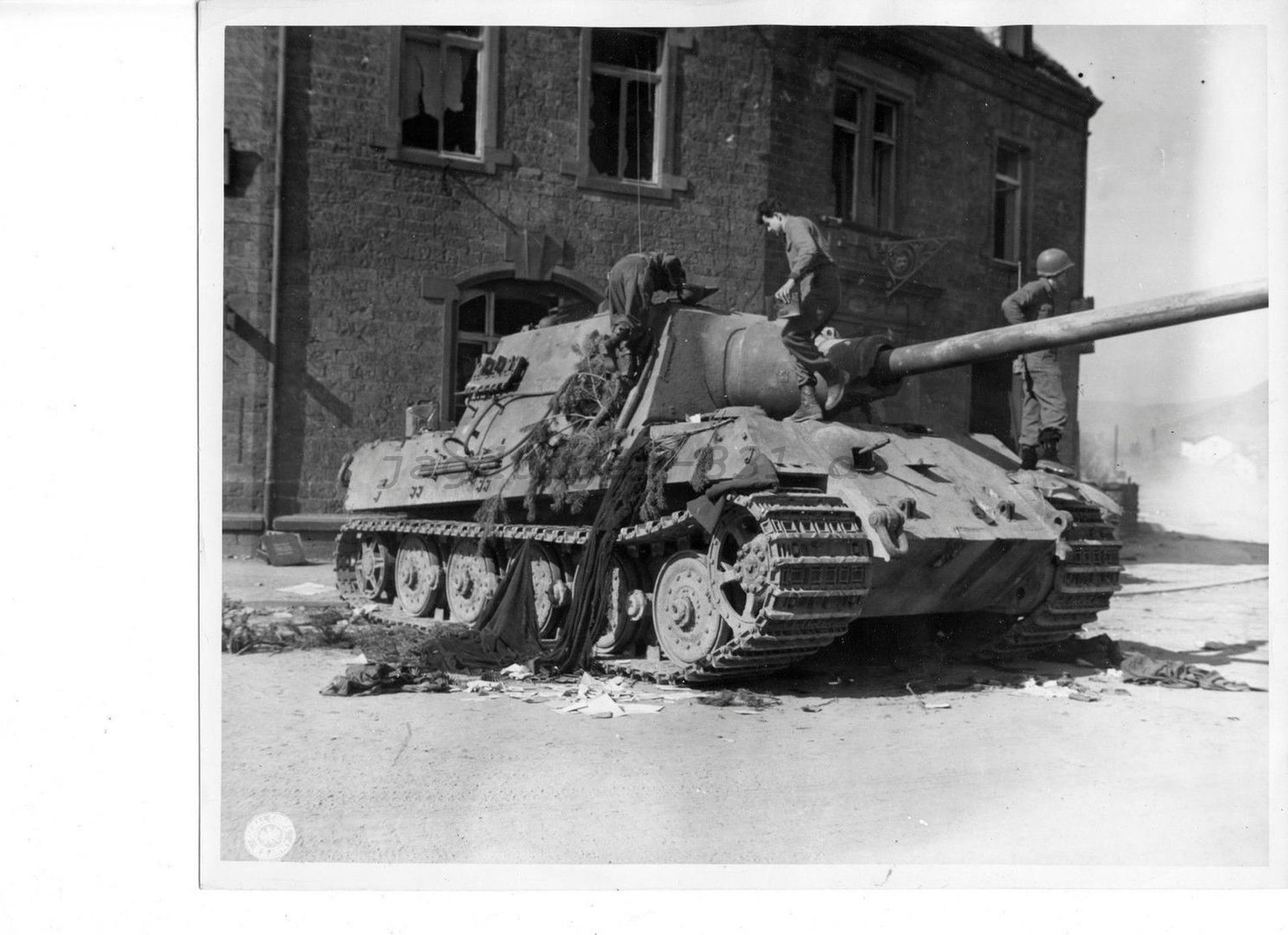
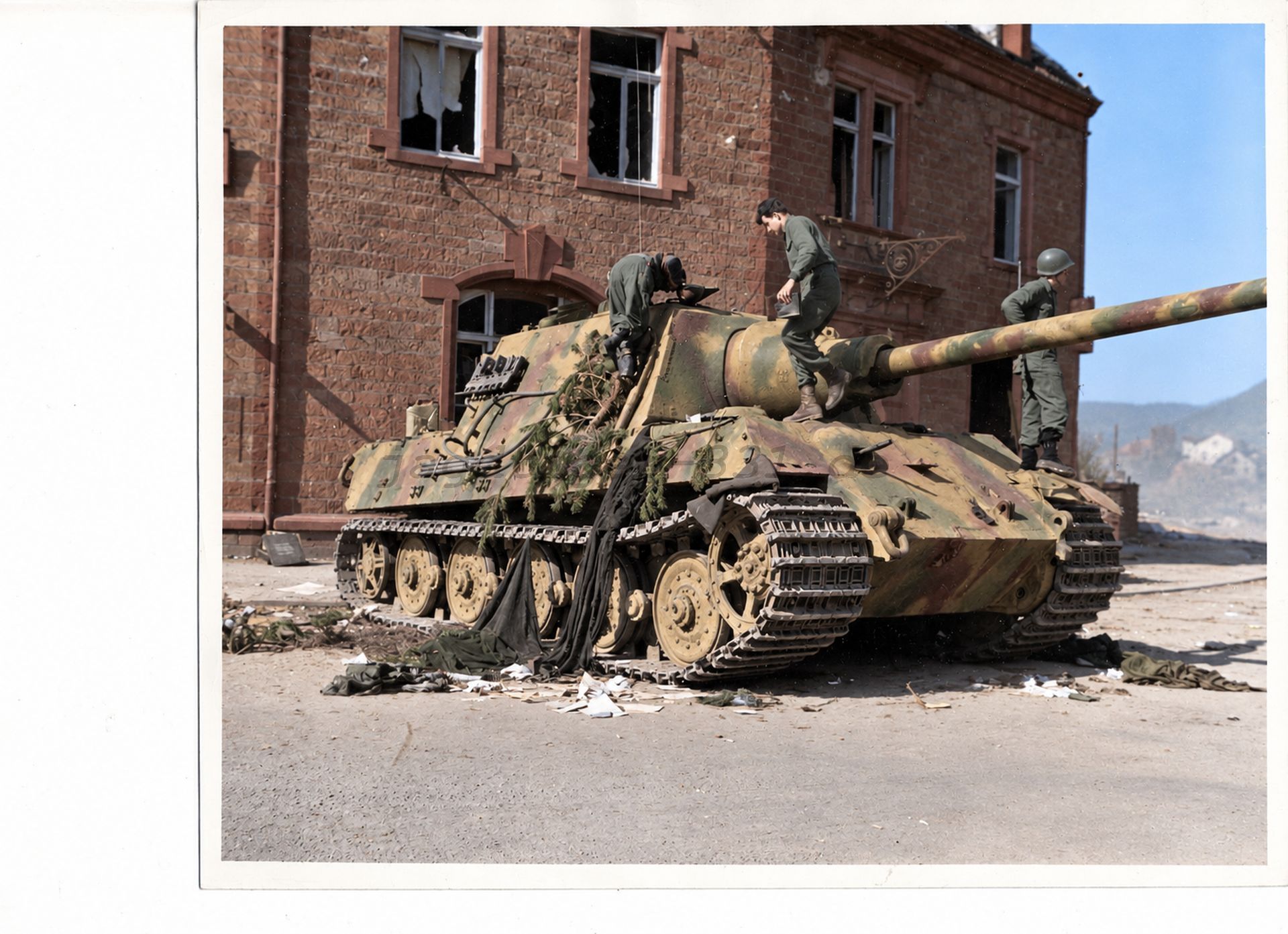
Close-up view of Jagdtiger 331. Three members of the U.S. Army Signal Corps inspect the vehicle at close range. The photograph also provides a detailed view of its condition shortly after it was abandoned.
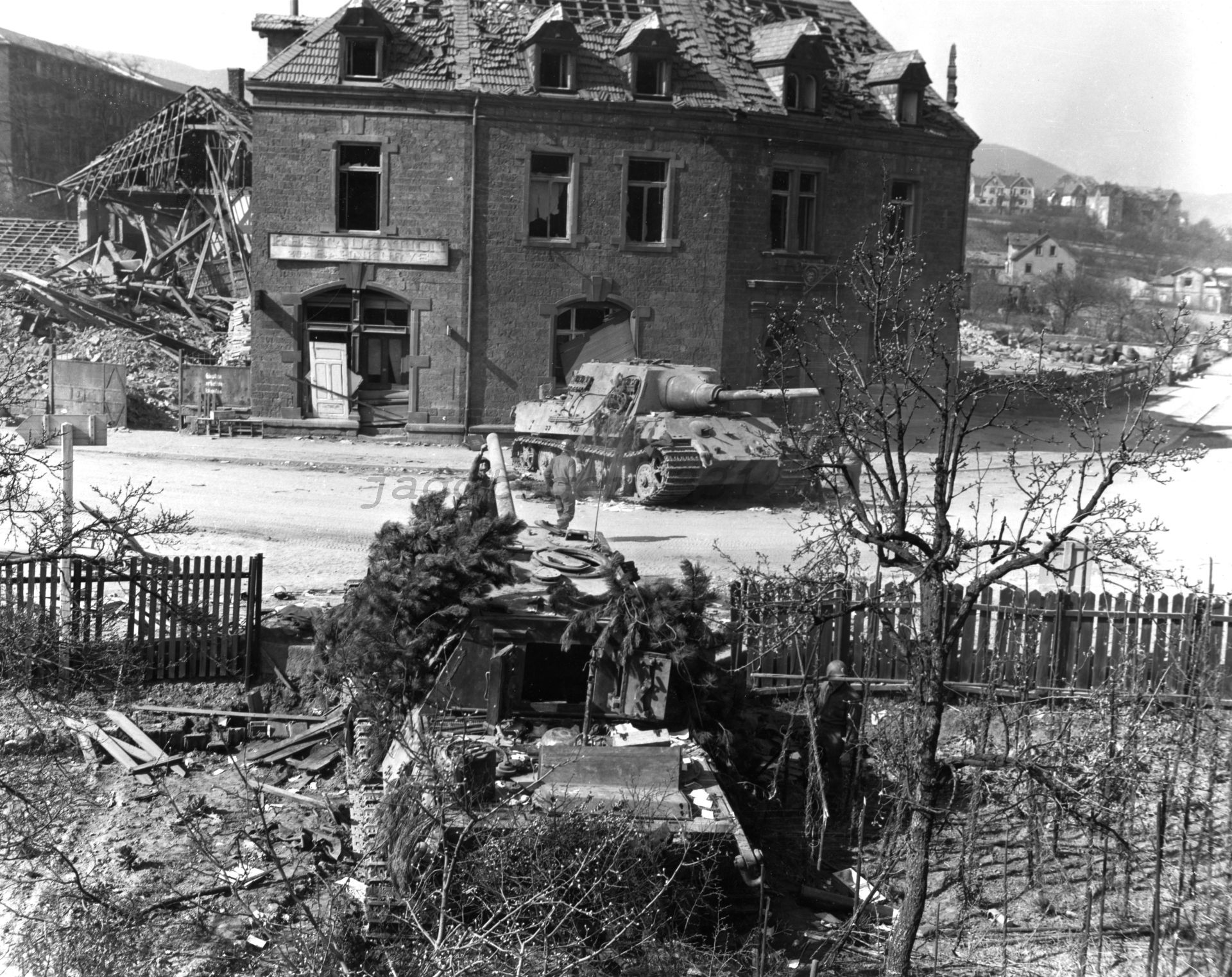
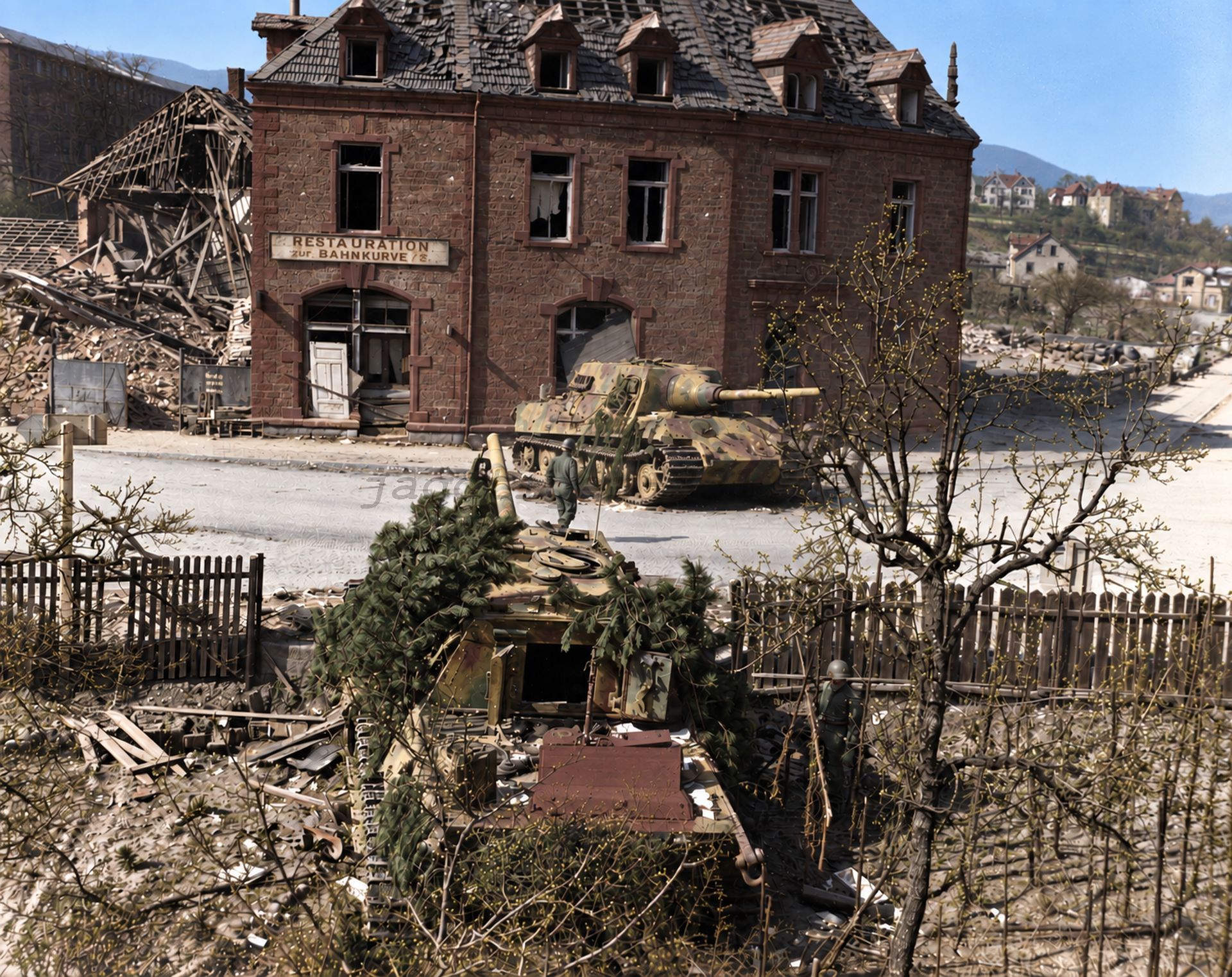
Overview of the scene: Jagdtiger 331 can be seen in the background, while Jagdtiger 323 is positioned farther forward in the garden. The photograph illustrates their relative positions.
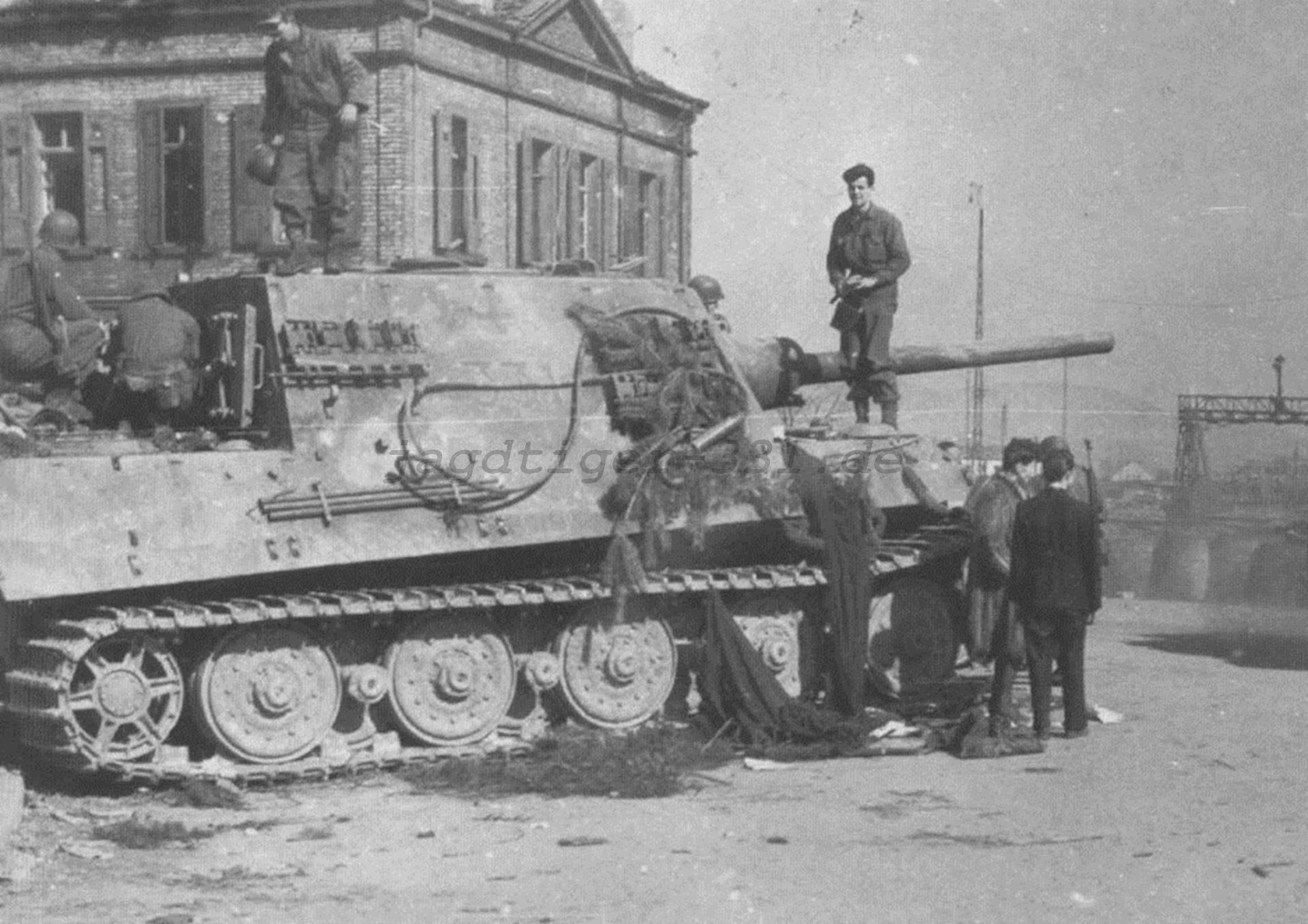
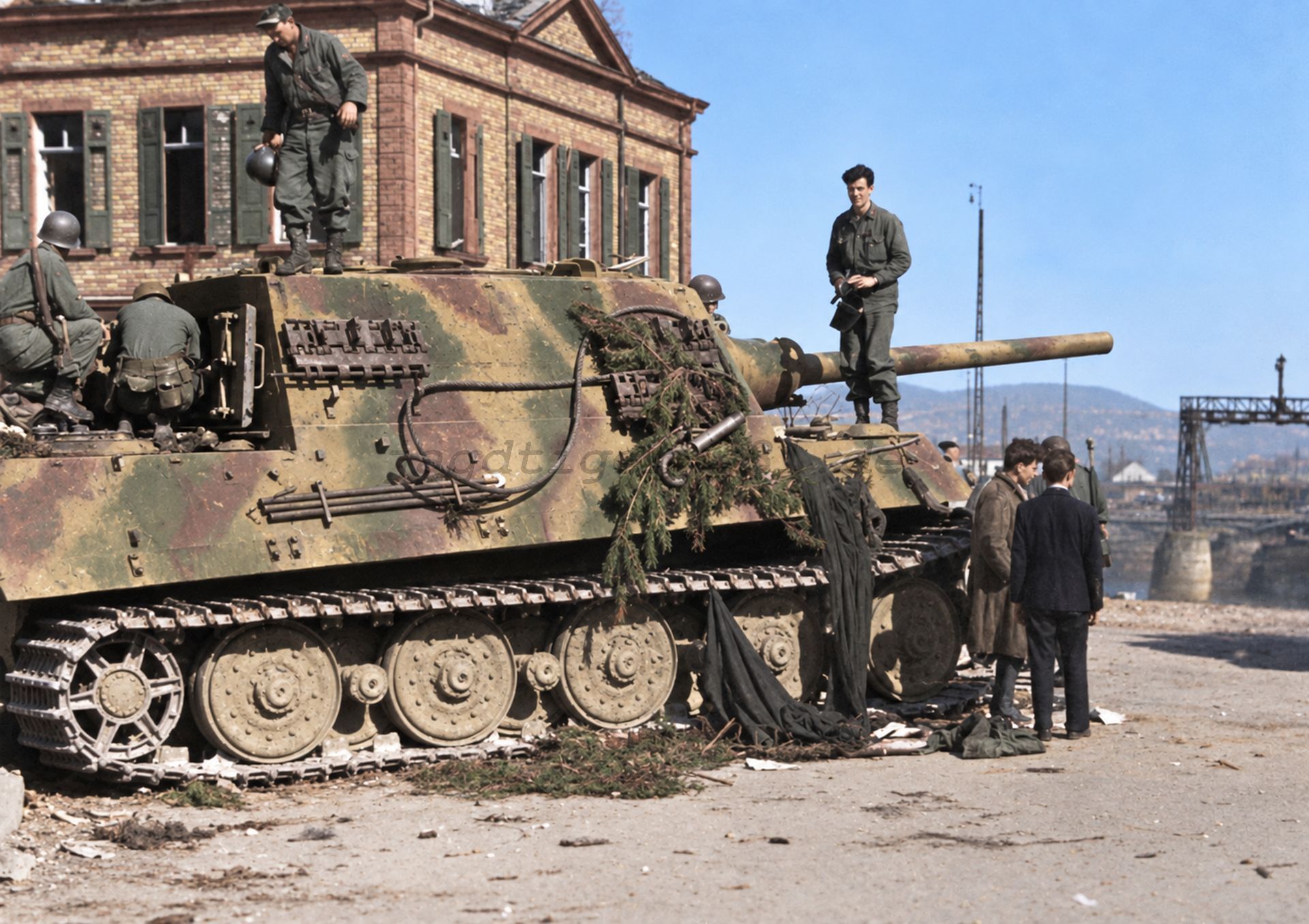
Another close-up of Jagdtiger 331, this time viewed to the east. Several American soldiers examine the abandoned vehicle. The camouflage materials and equipment still attached to the tank are particularly visible; some of these items are missing in later photographs.
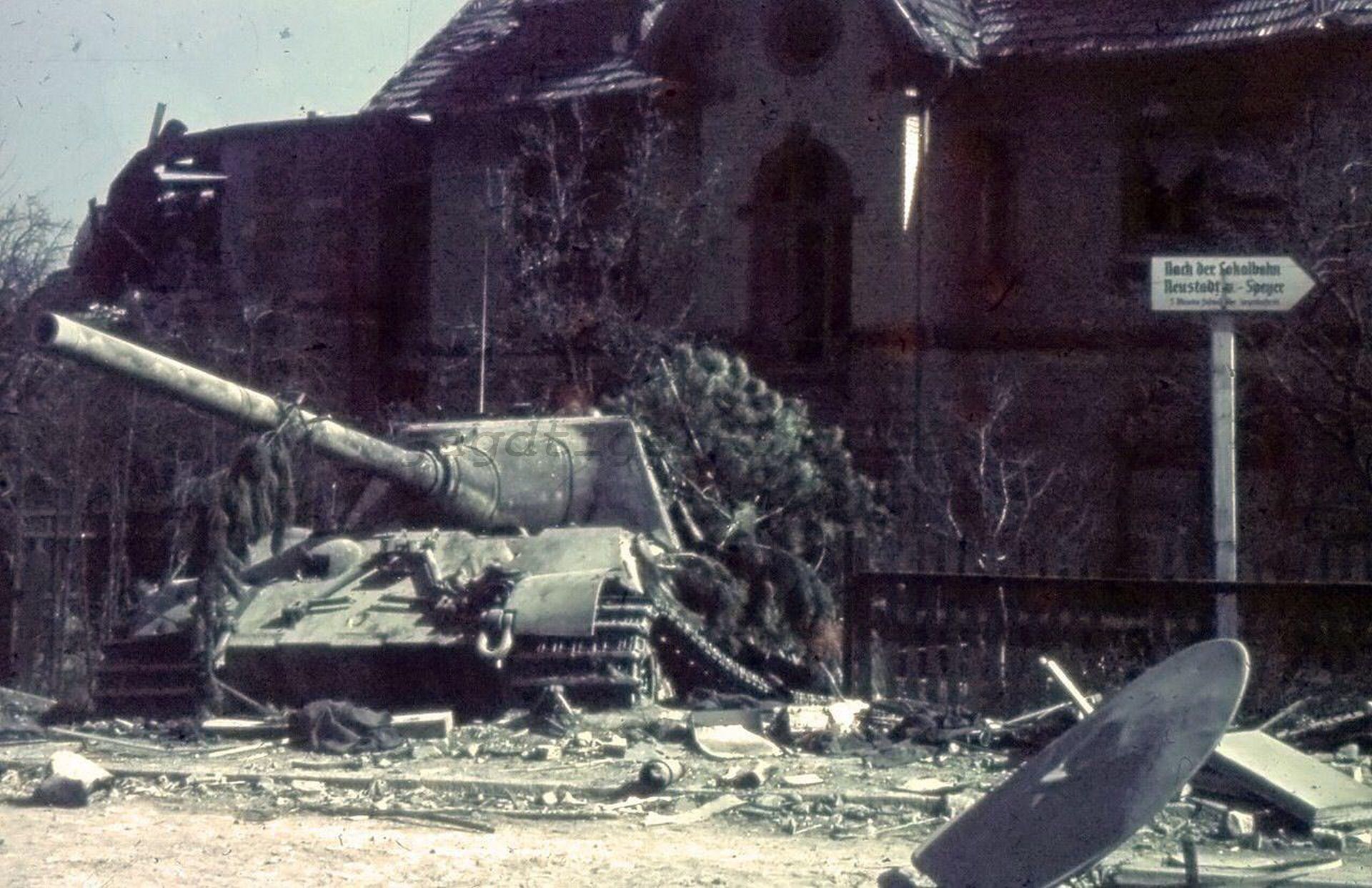
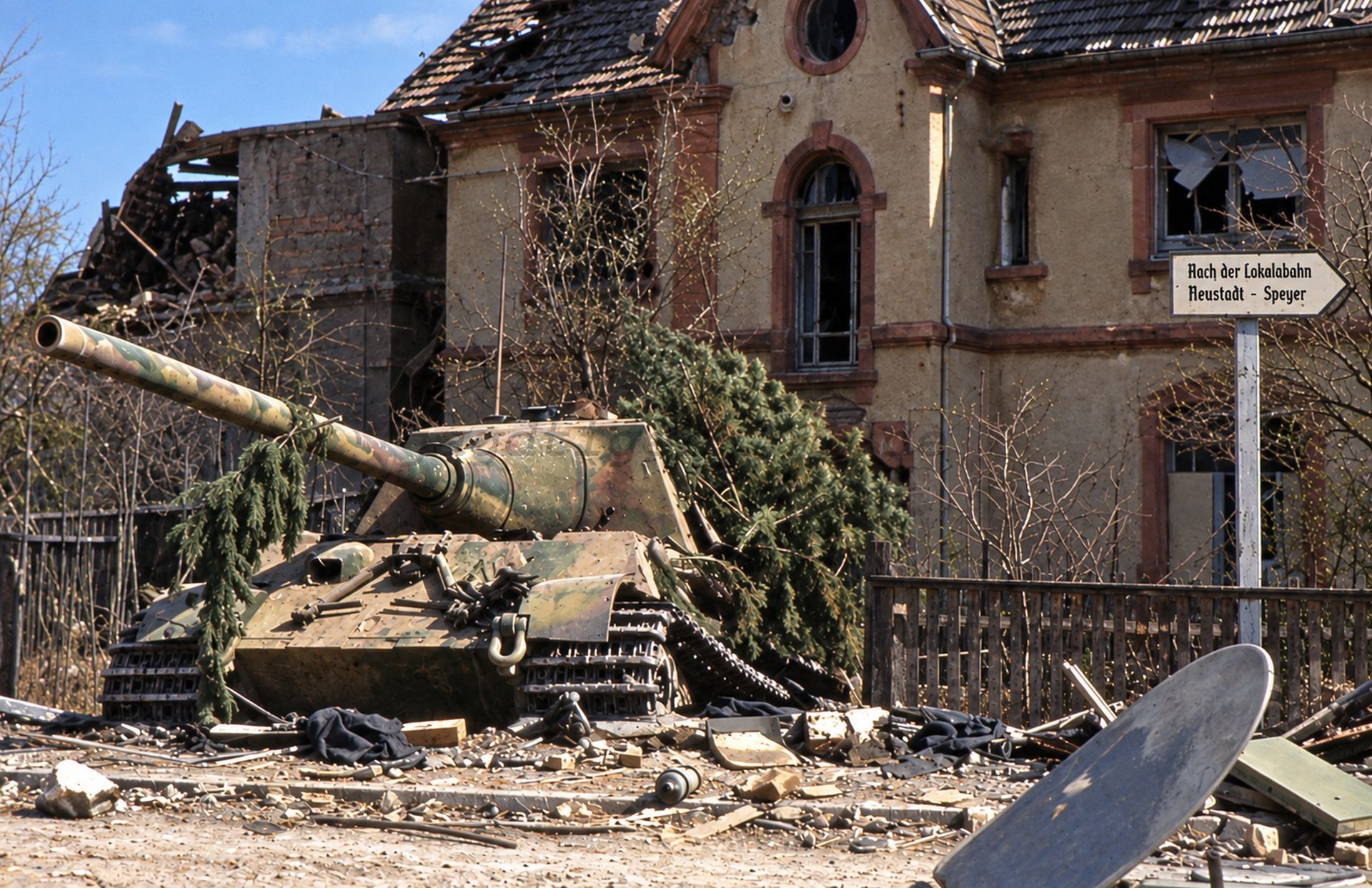
This photograph of 323, already an original color image, has been carefully enhanced. The debris and heavily damaged residential building in the background are clearly visible.
The Visit of the American Generals
The next series probably shows a later moment on March 23, 1945, when two American generals arrived in armored Willys Jeeps to inspect the abandoned vehicles.
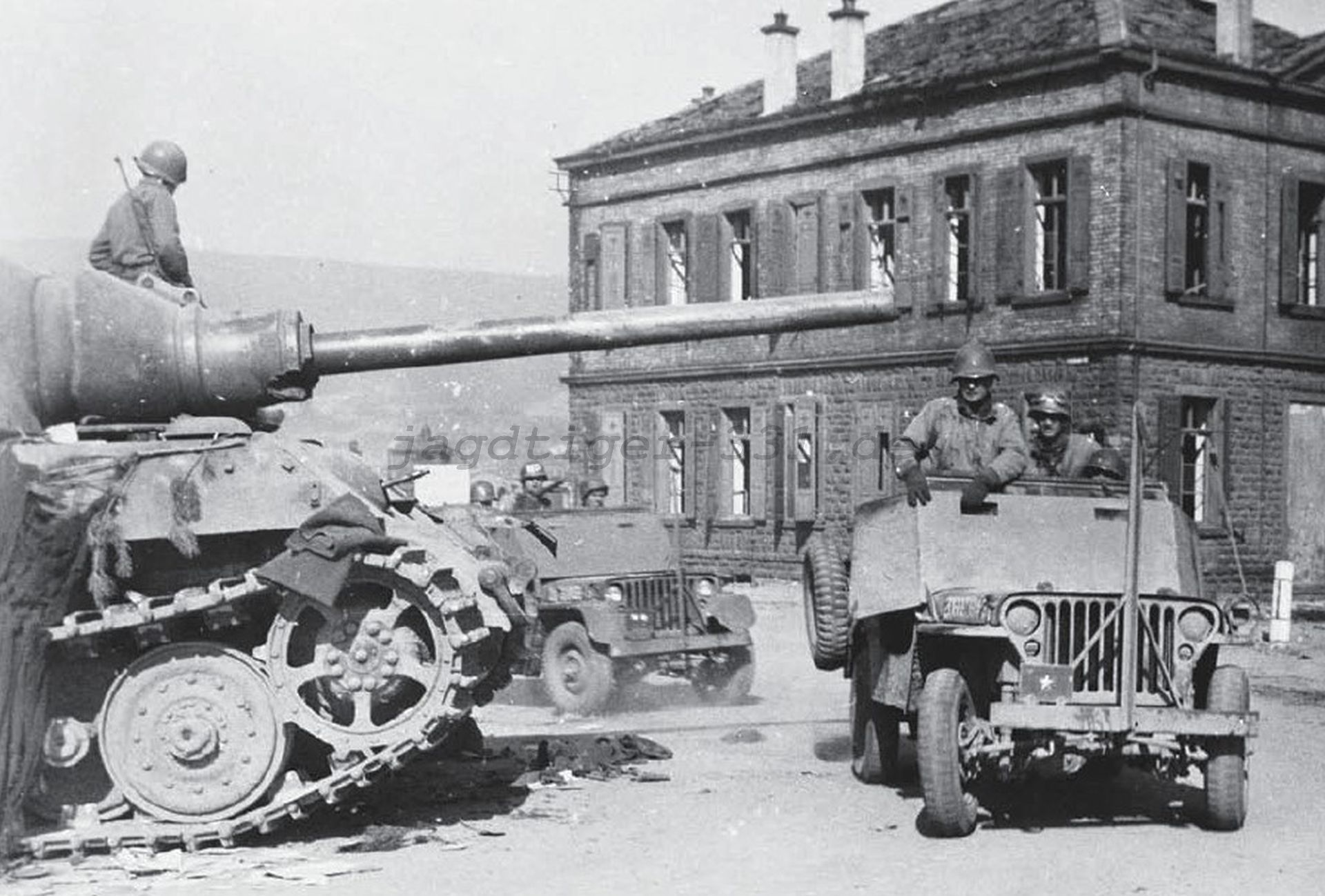
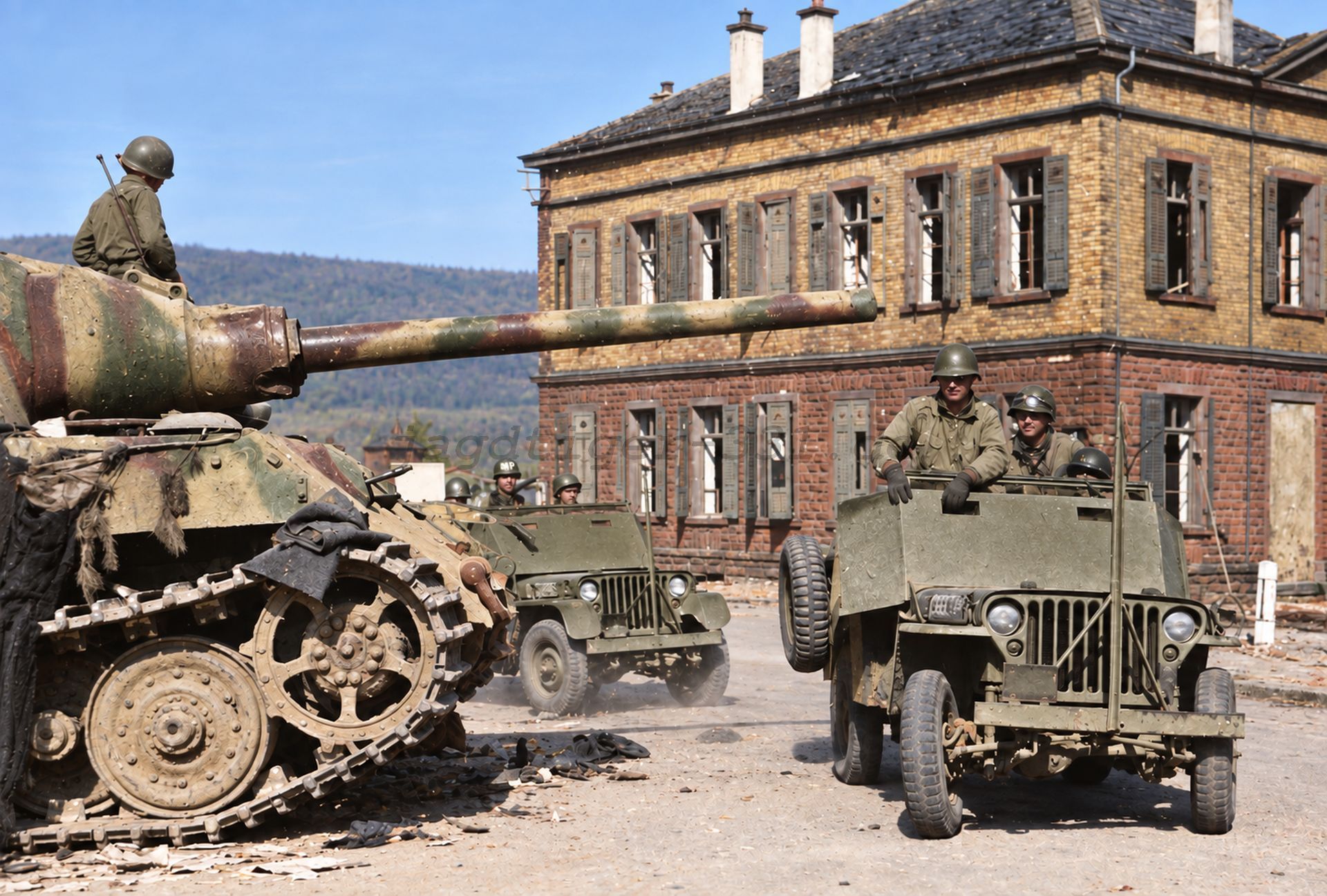
The arrival of the two Willys Jeeps. Particularly noteworthy is the additional armor surrounding the windshields of both vehicles.
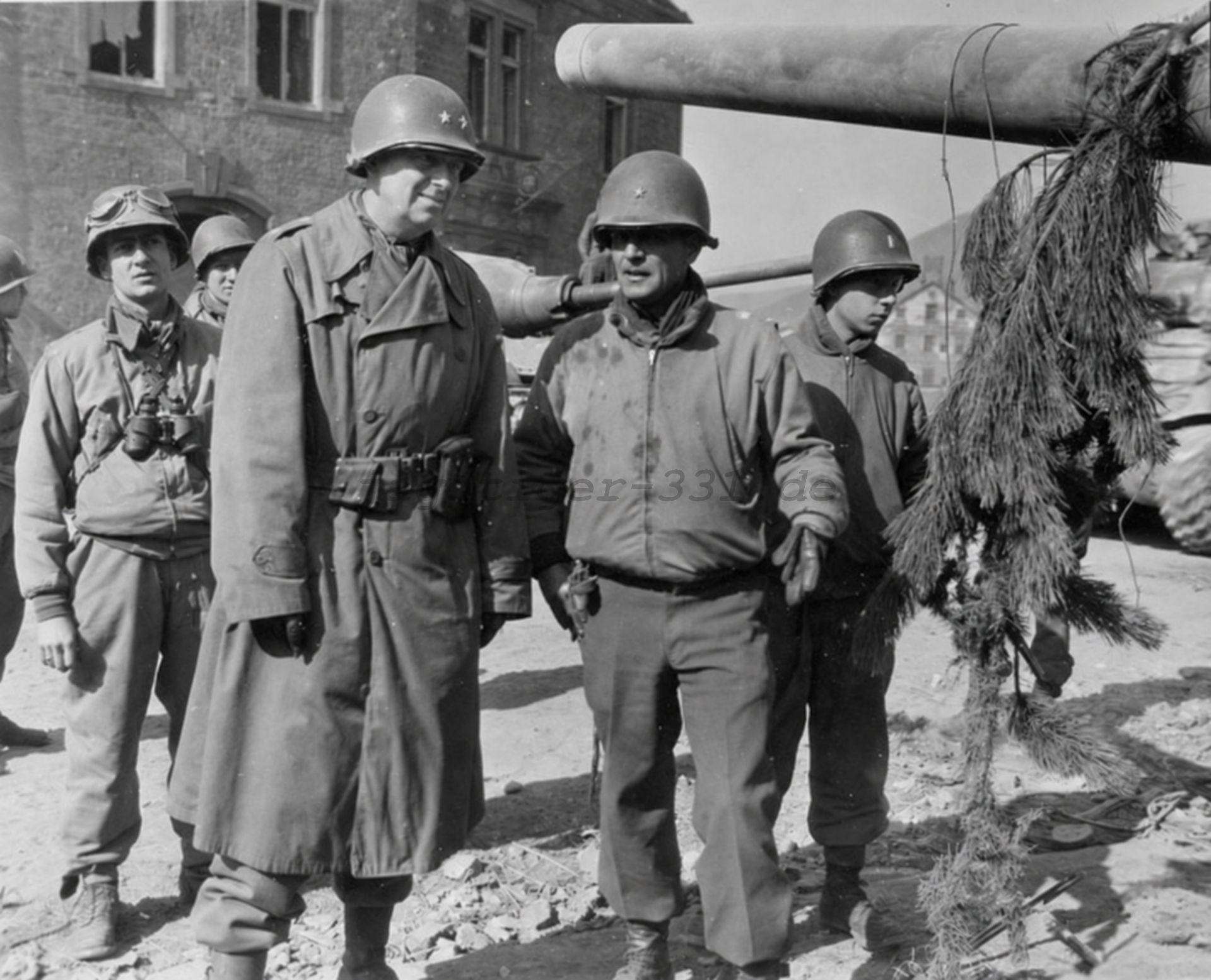
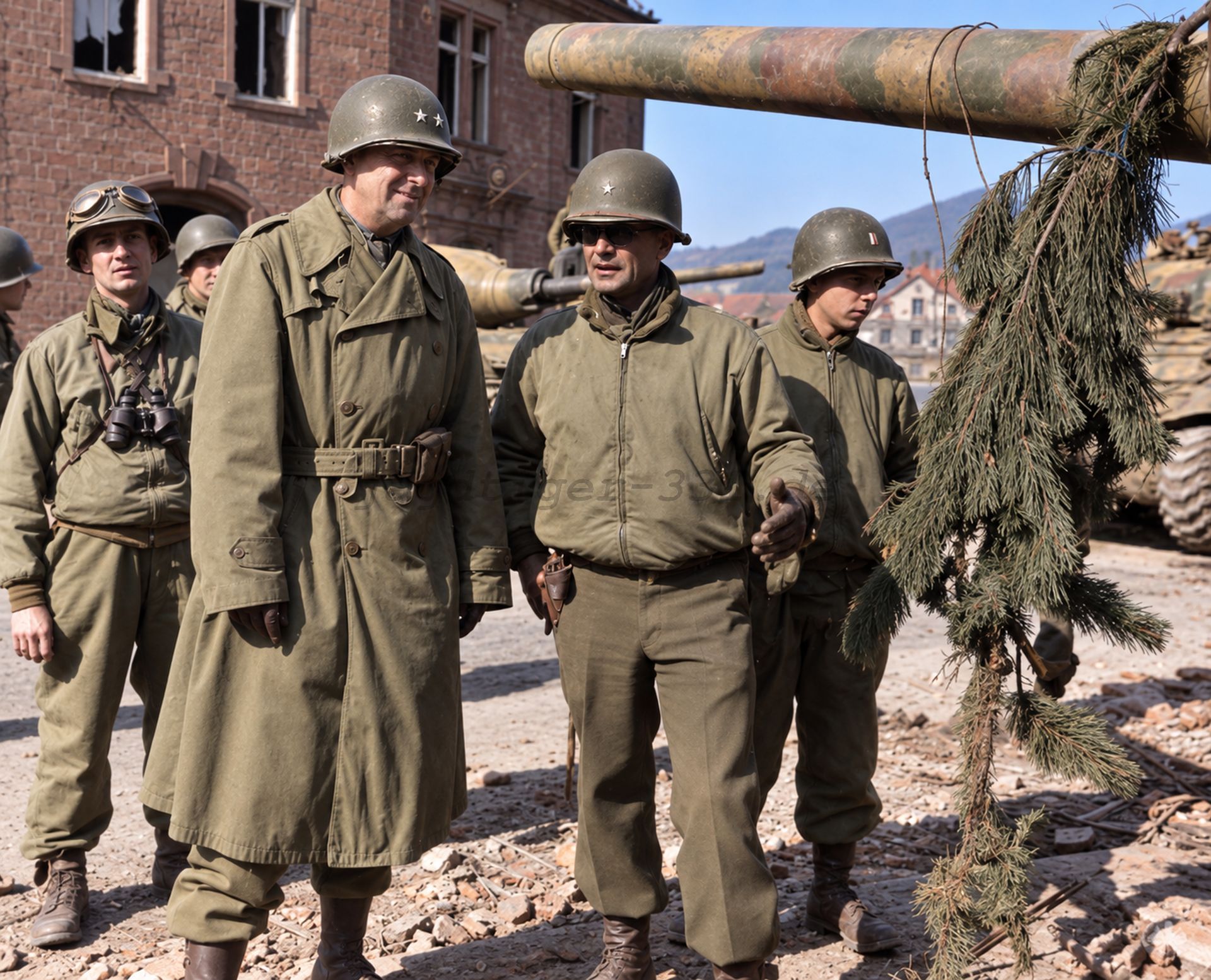
The two generals are very likely Major General William H. H. Morris Jr. (left) and Brigadier General Edwin W. Piburn (right). An M4 Sherman is visible in the right background, with Jagdtiger 331 to its left.
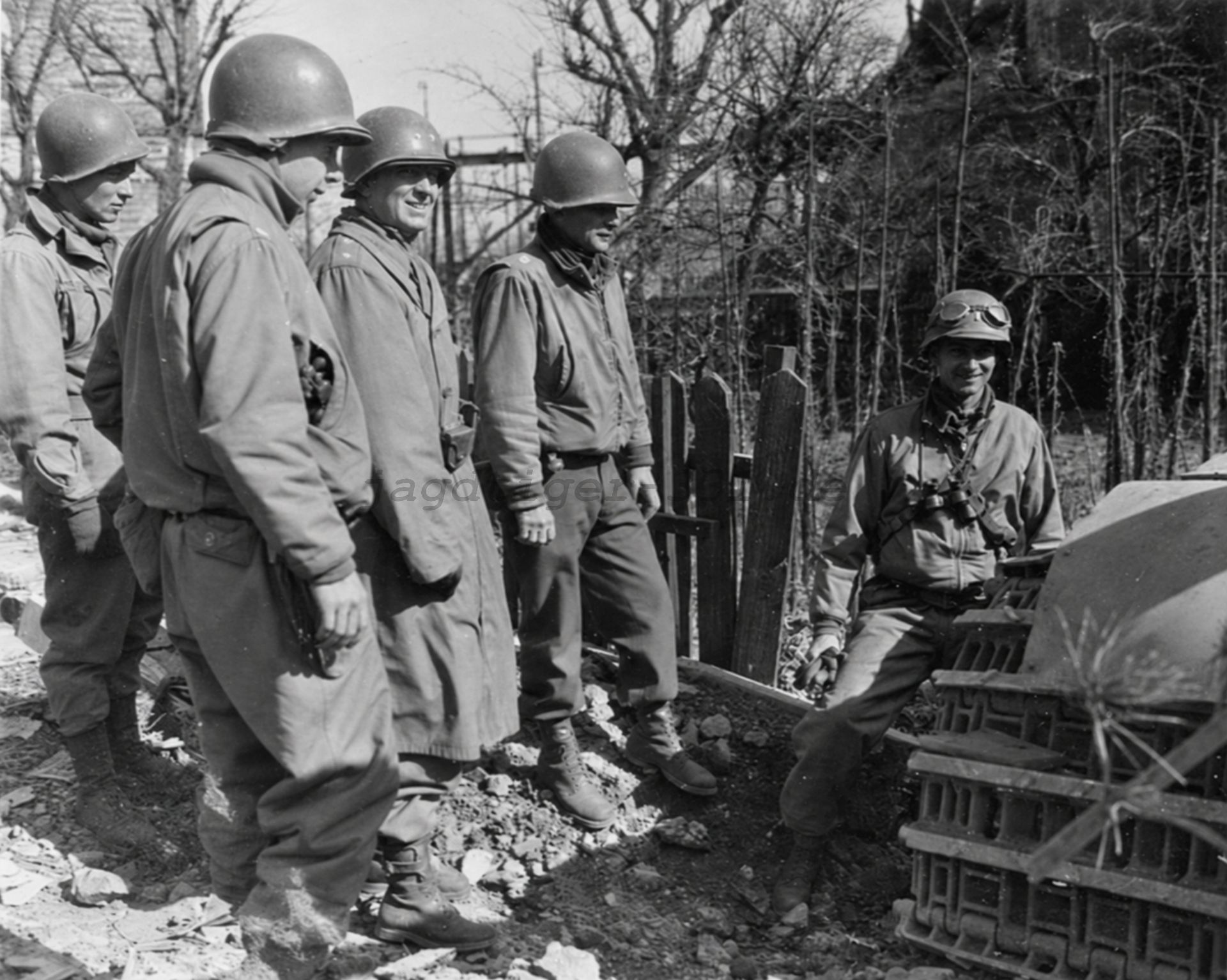
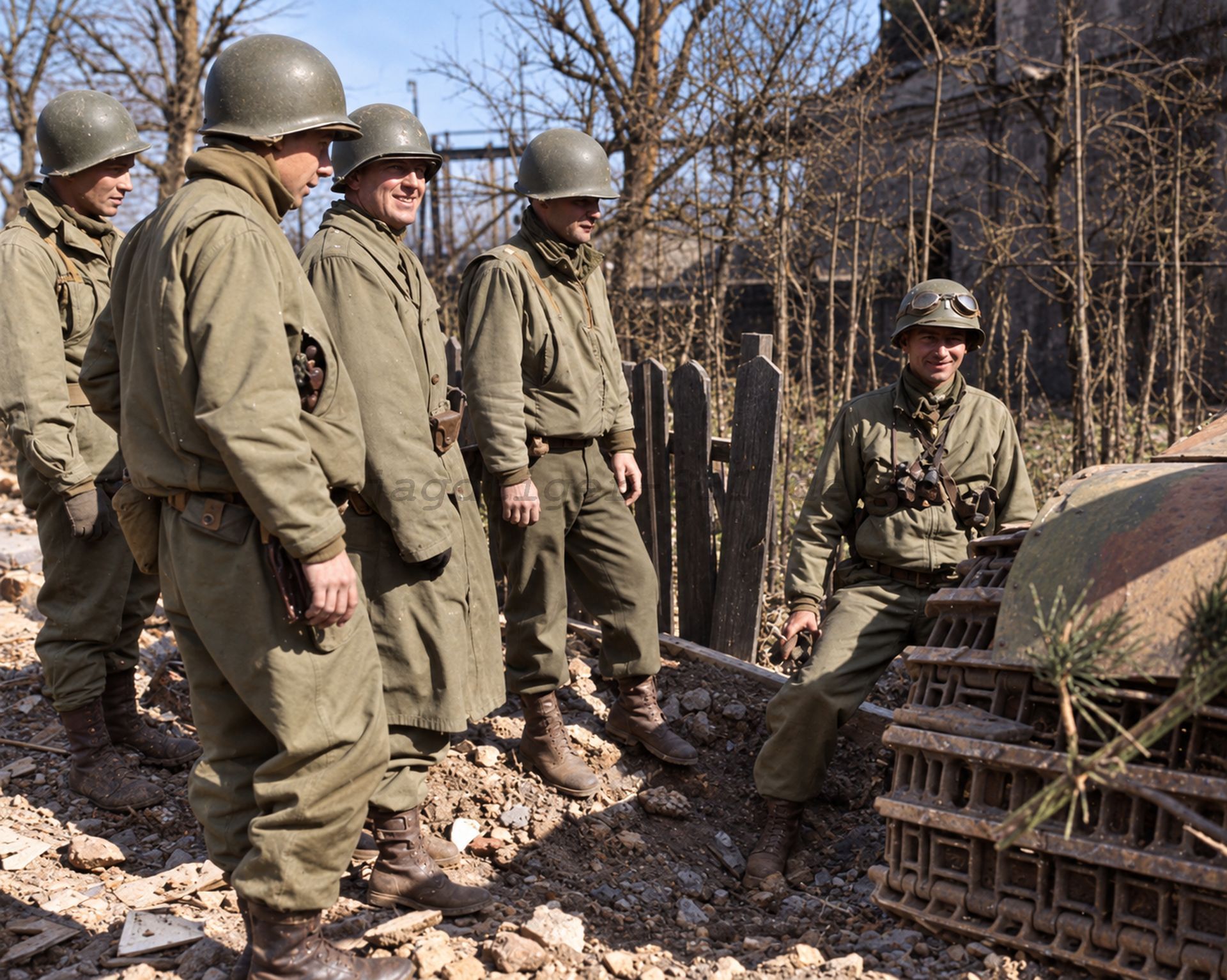
Removal of Jagdtiger 331
The following photographs cannot be dated with certainty. Jagdtiger 331 was probably removed on March 24 or 25, 1945. Later photographs were most likely taken near the railway sidings east of the station. This interpretation remains a reconstruction.
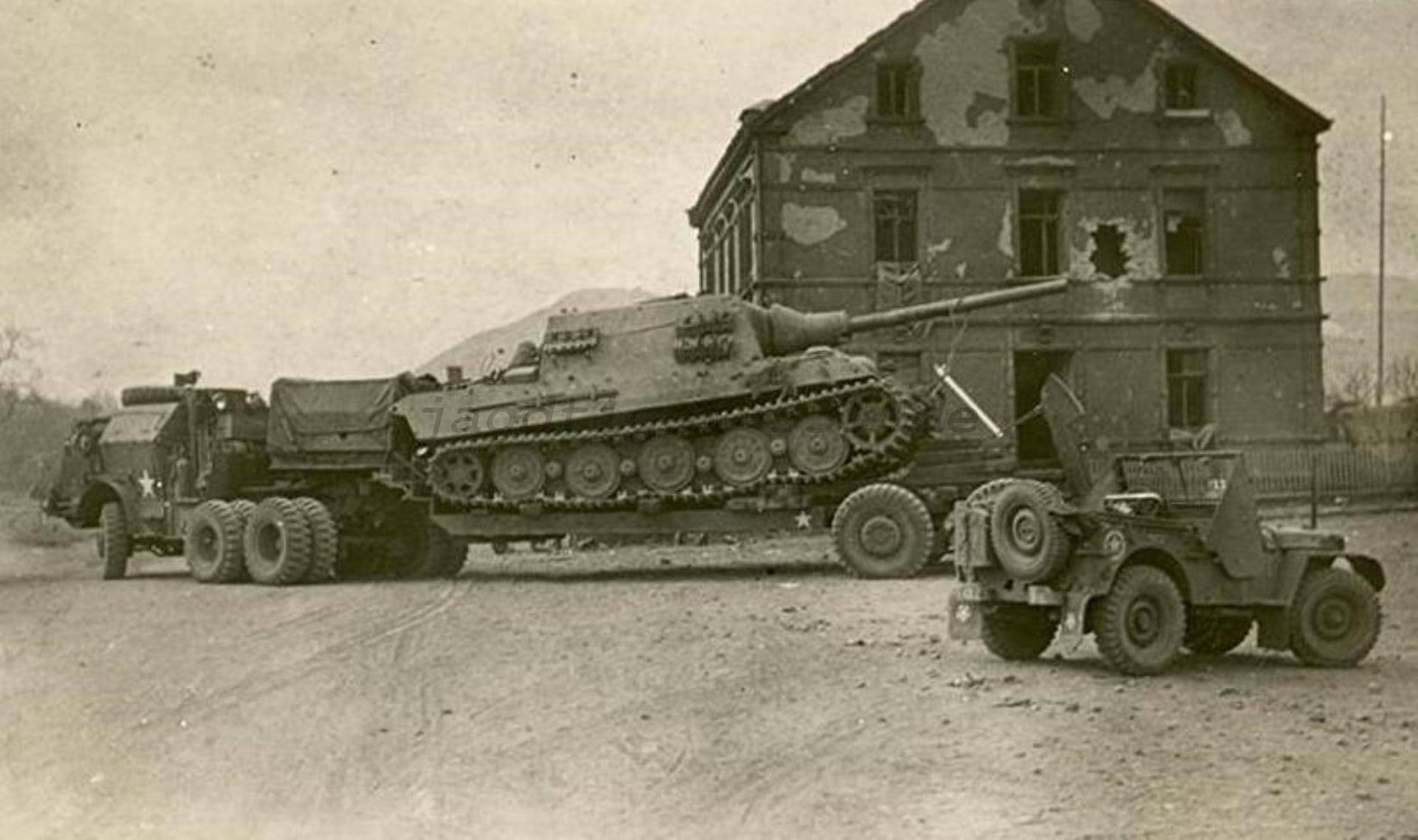
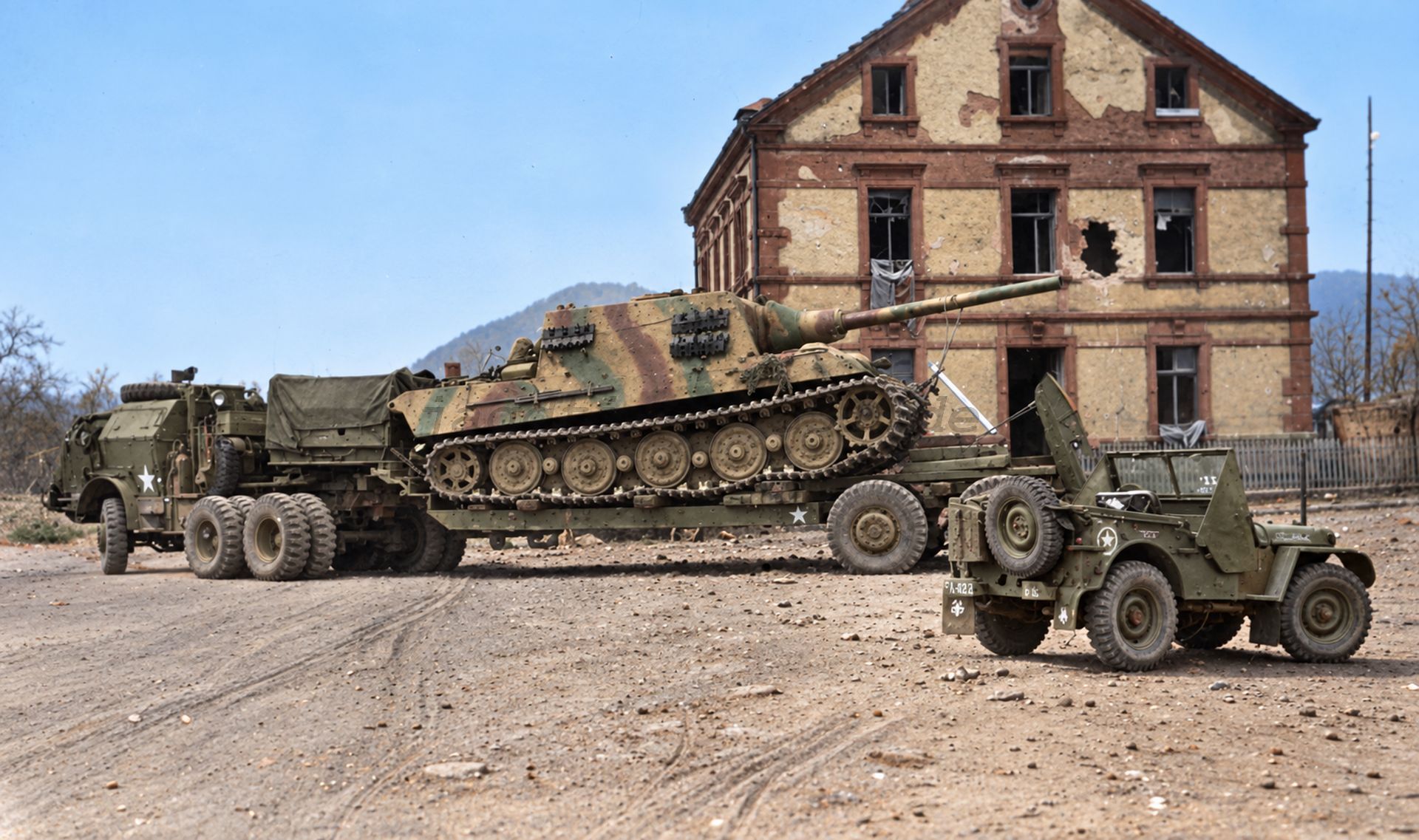
Jagdtiger 331 aboard a U.S. Army M25 transporter at the intersection of Winzinger Straße, Landauer Straße and Stiftstraße. The transporter turns northwest into Landauer Straße, presumably heading toward the railway loading area.
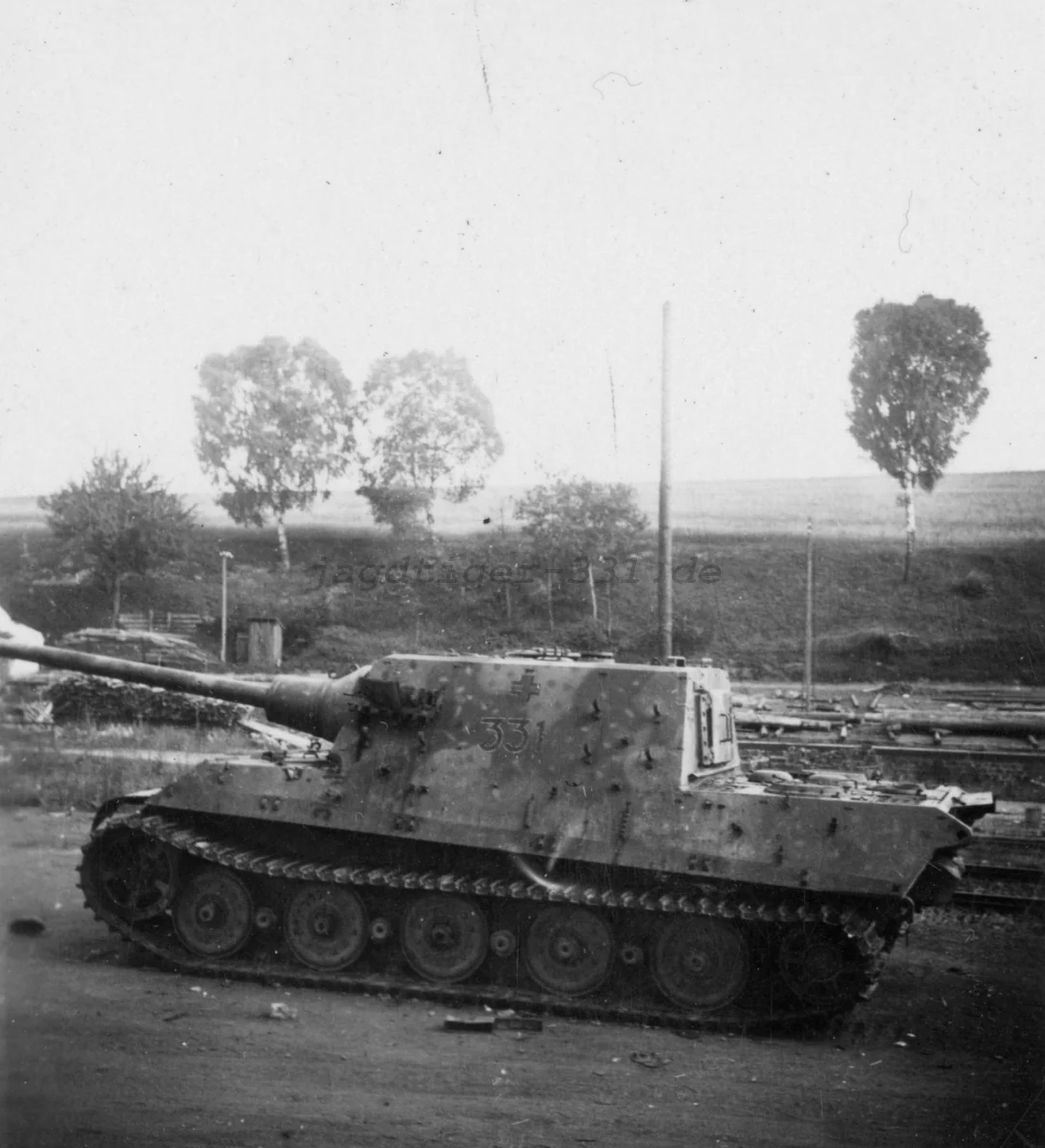
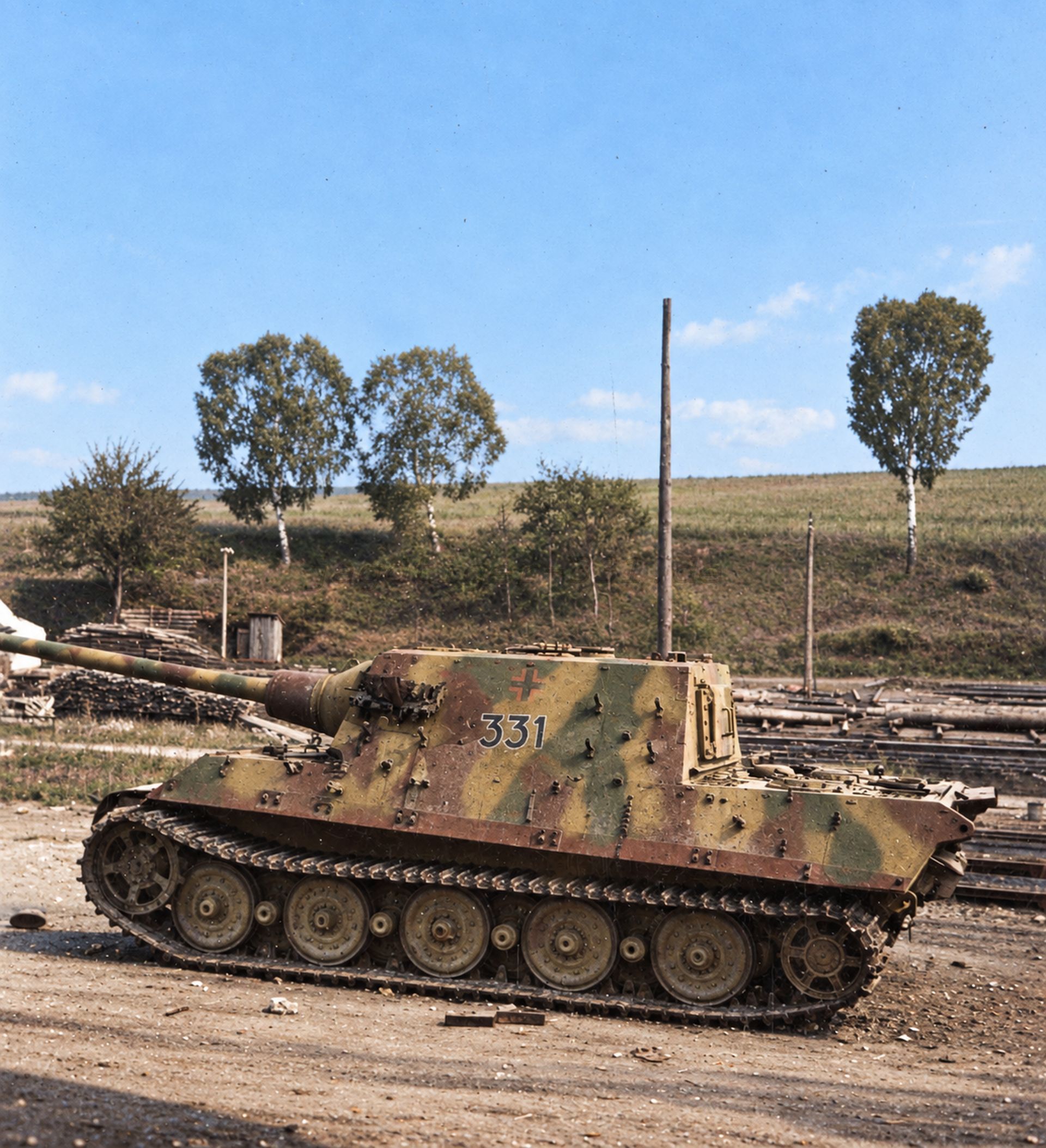
Jagdtiger 331 in the railway sidings, apparently shortly before loading onto a flatcar. Previously visible loose equipment has already been removed.
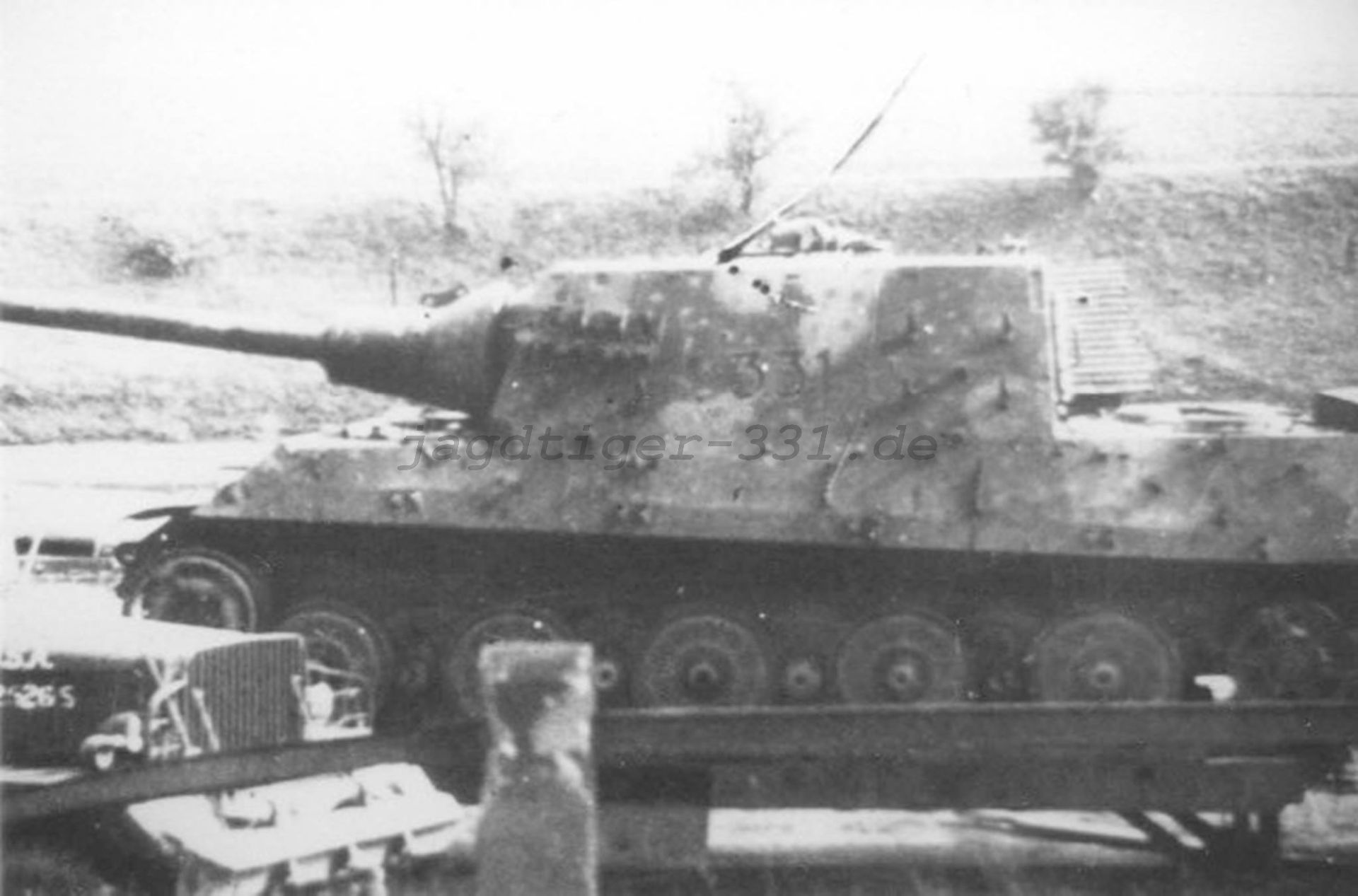
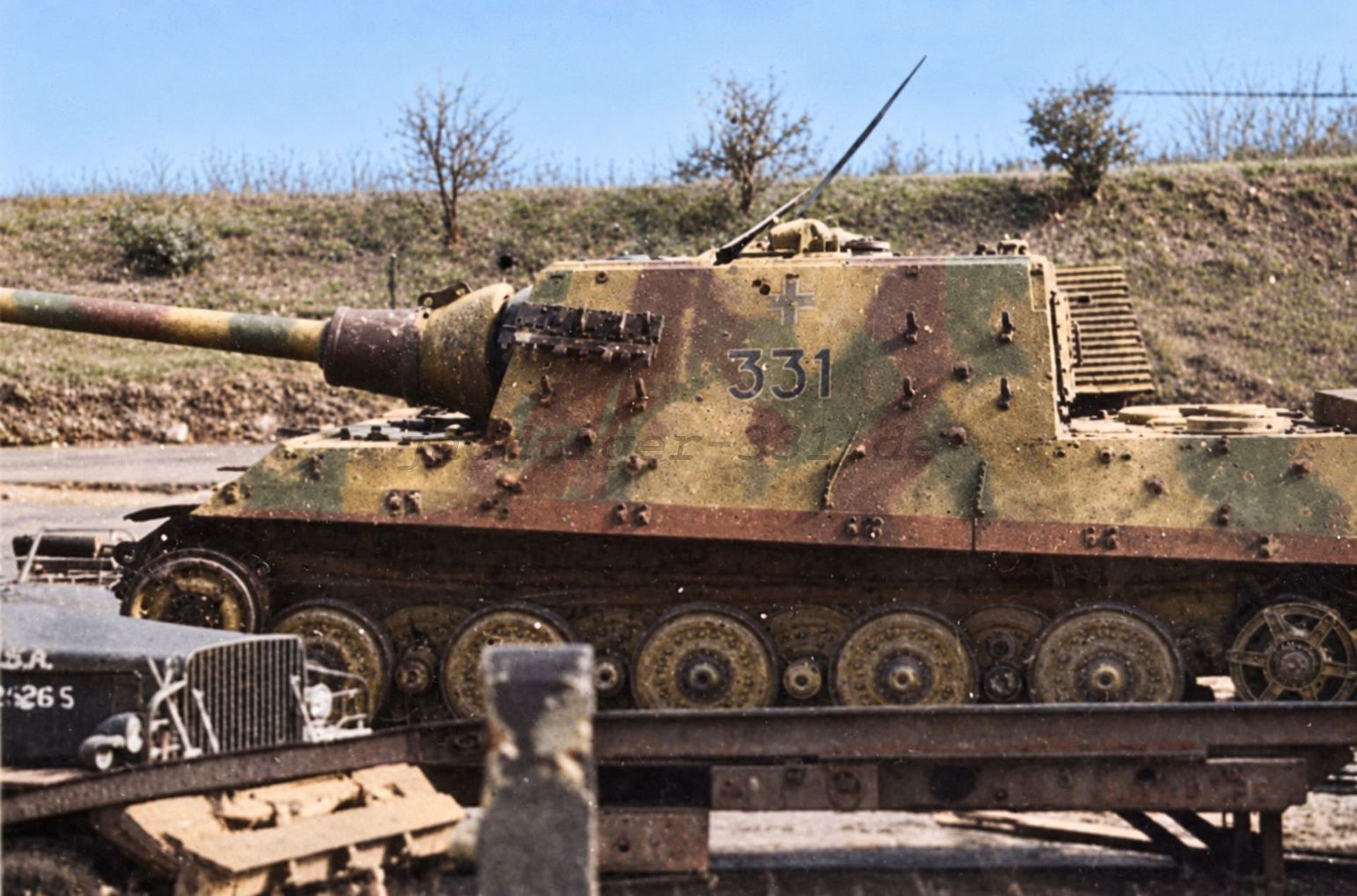
Another photograph in the railway sidings. The vehicle appears to have been moved slightly; both tracks have now been removed.
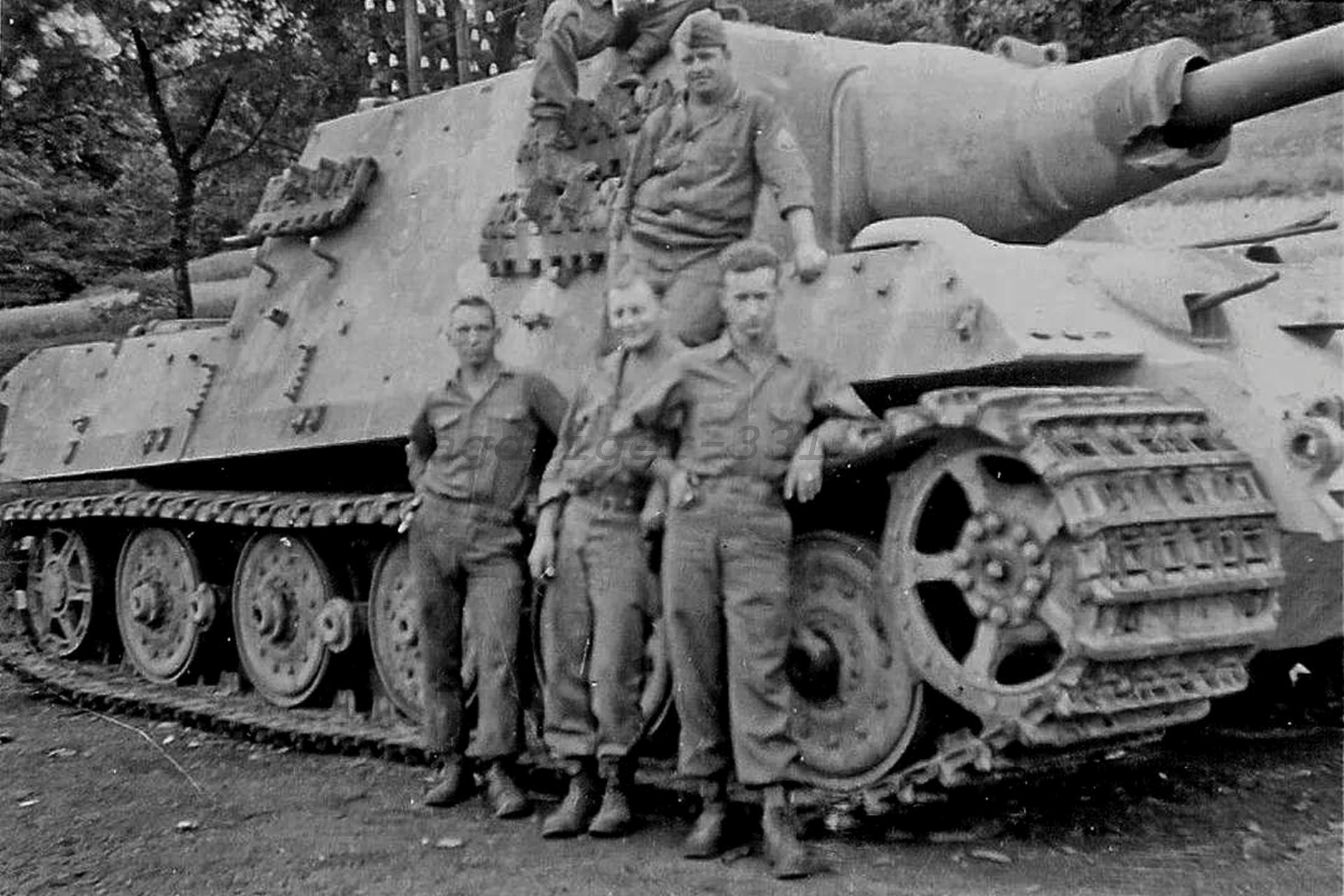
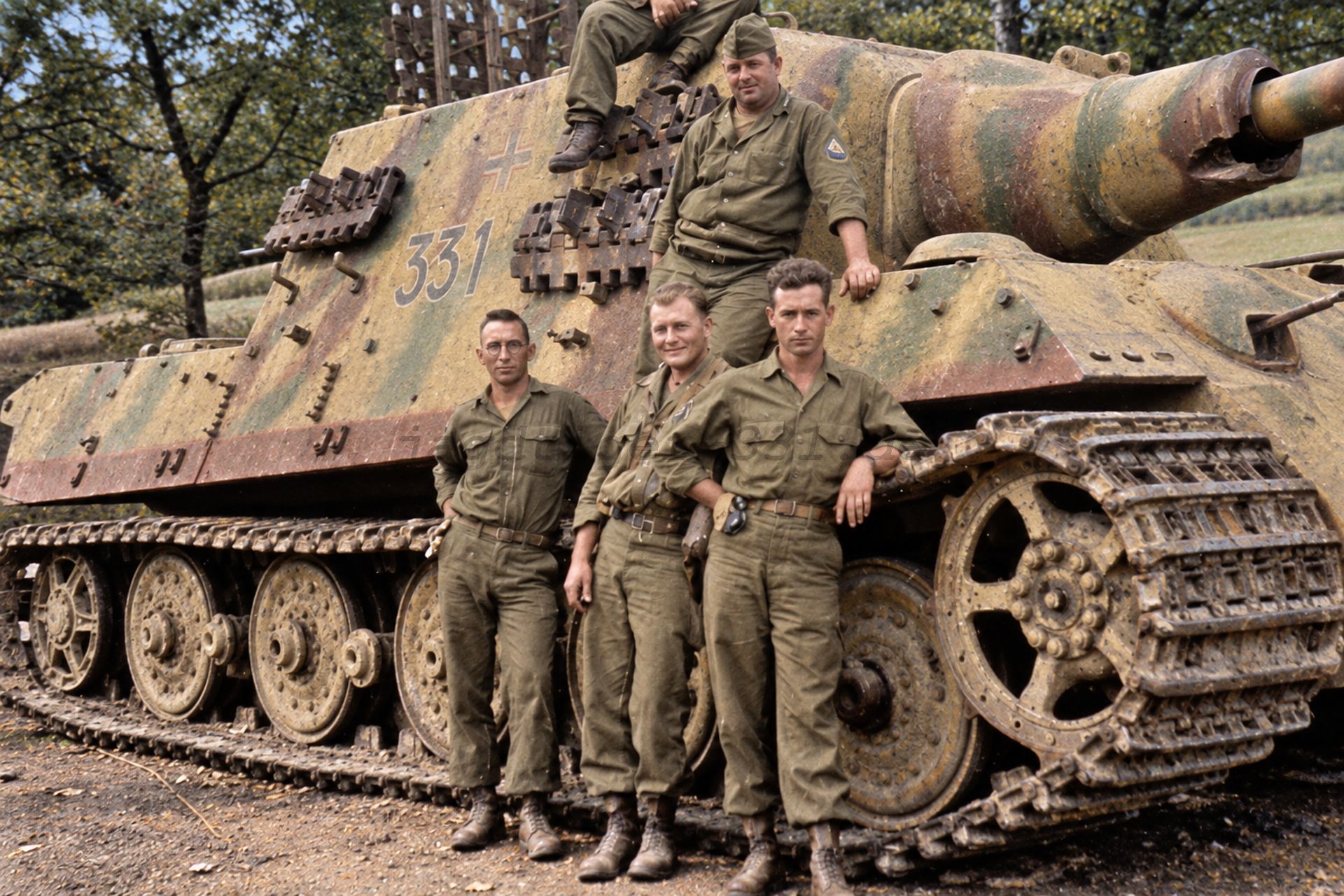
Five American soldiers pose on and beside Jagdtiger 331. The equipment is already missing. The photograph was probably taken at the loading area.
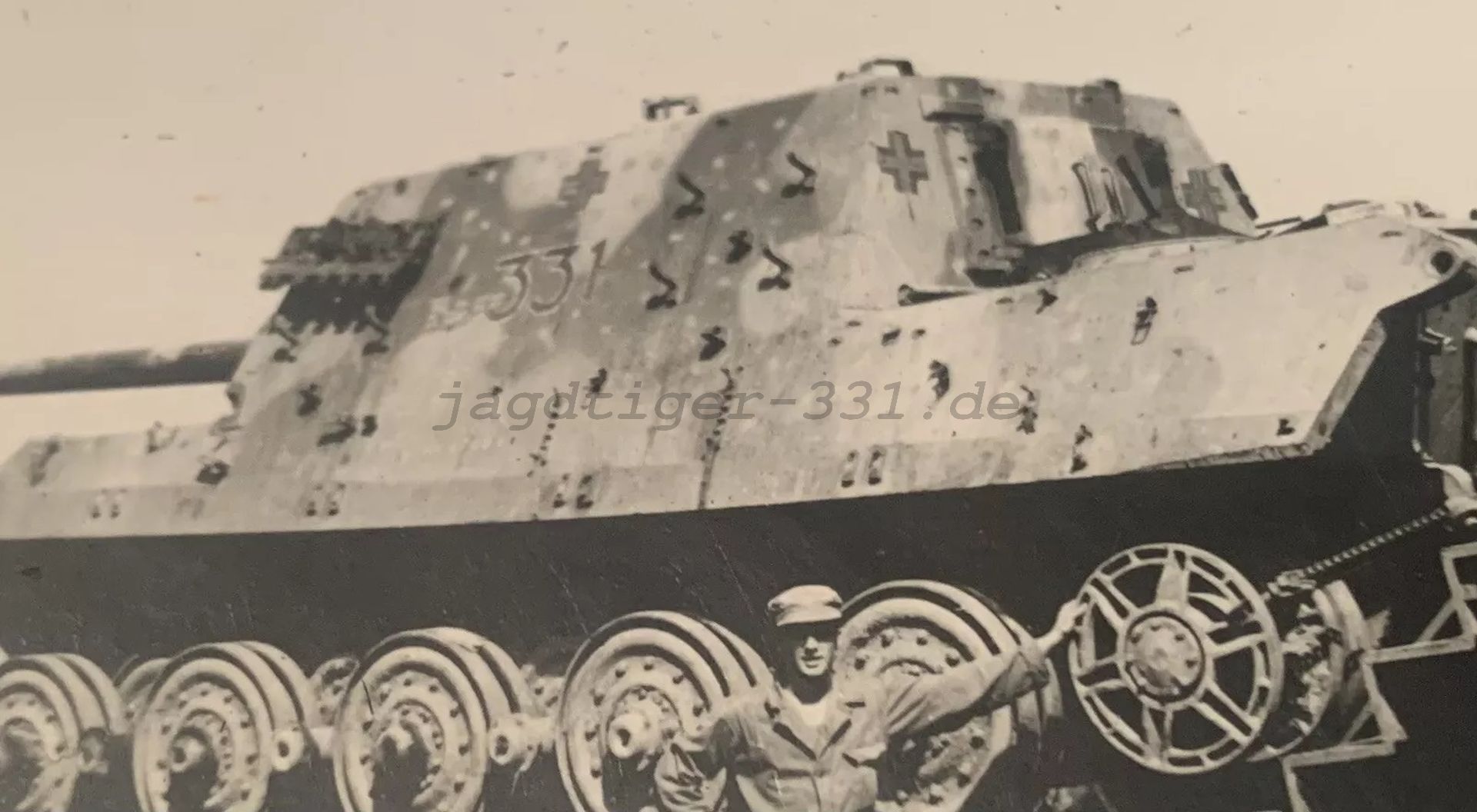
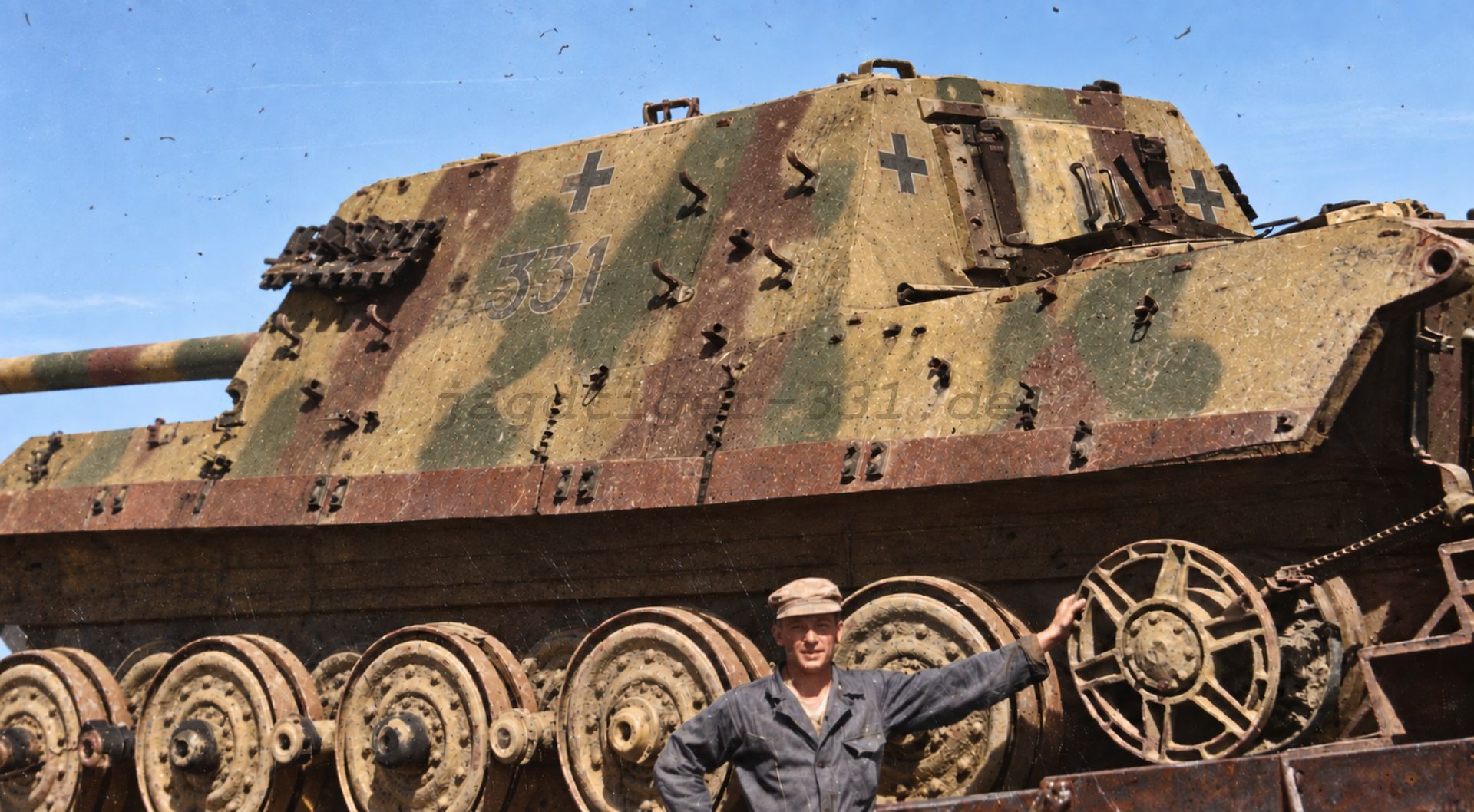
Jagdtiger 331 appears to have been loaded onto a railway flatcar. Both tracks have been removed.
Jagdtiger 323 After Recovery
These photographs document Jagdtiger 323 after its recovery from the garden and its later movements within Neustadt.
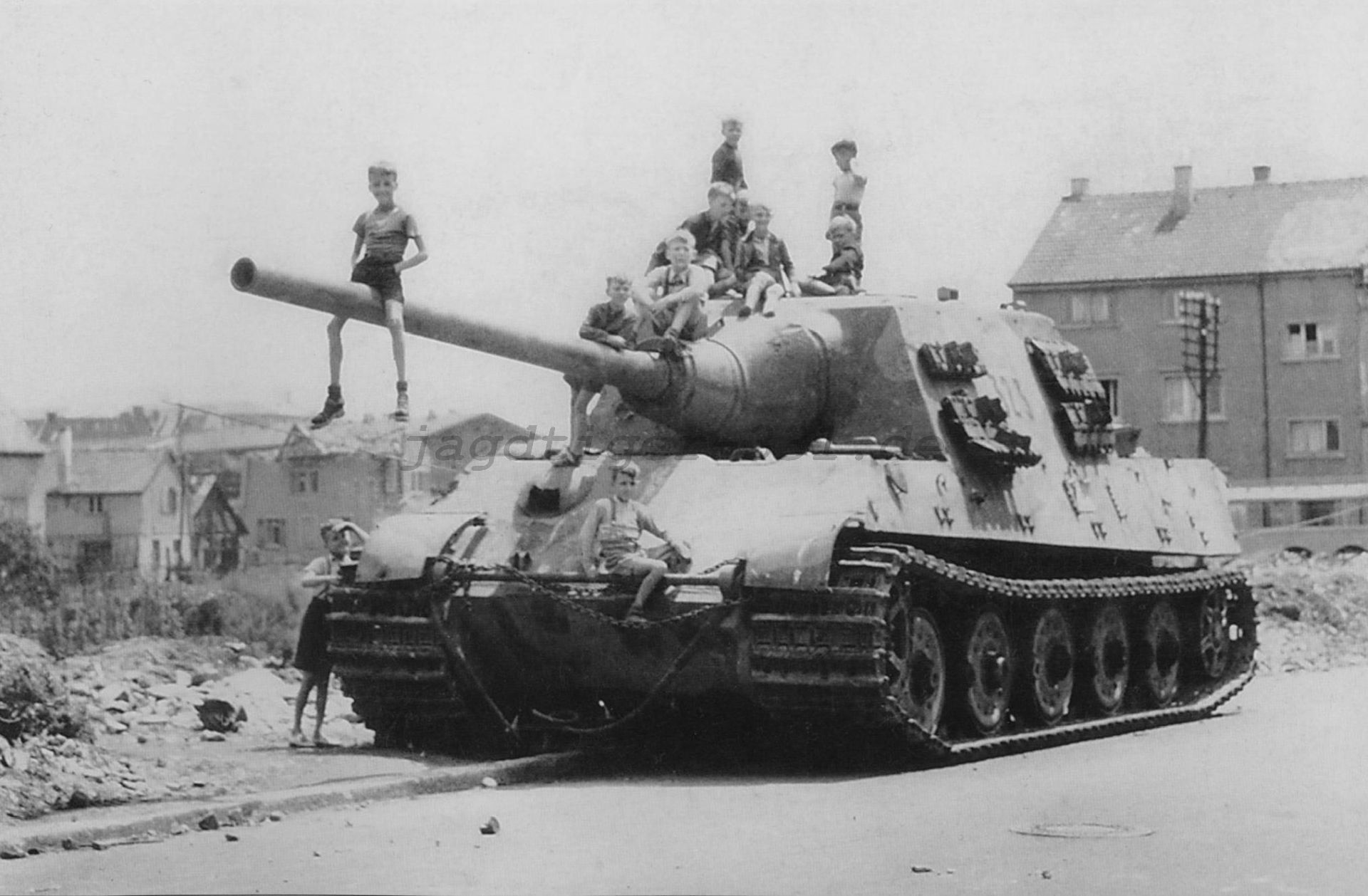
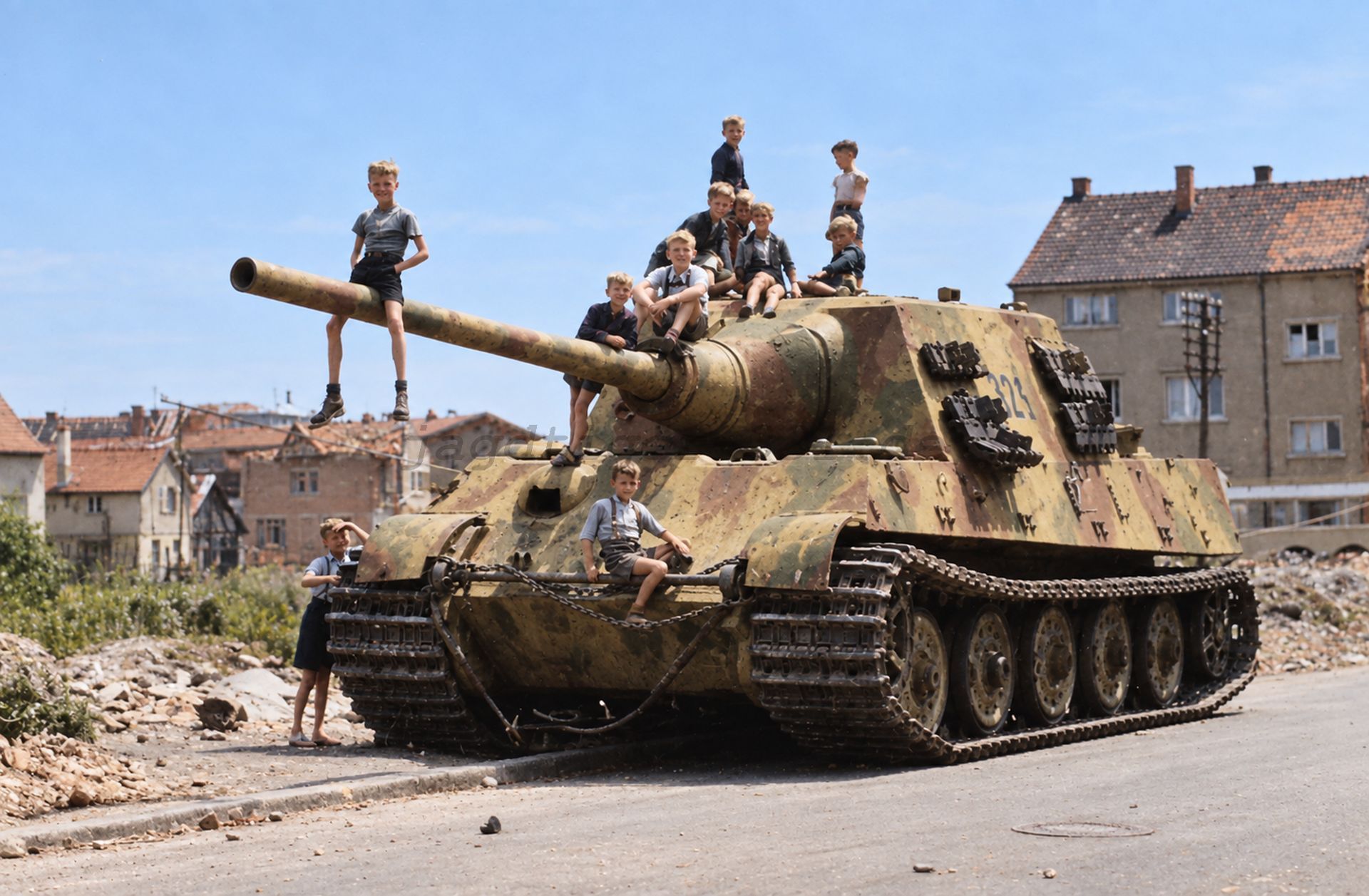
Jagdtiger 323 near Von-der-Tann-Straße 17. Several children climb on the abandoned vehicle.
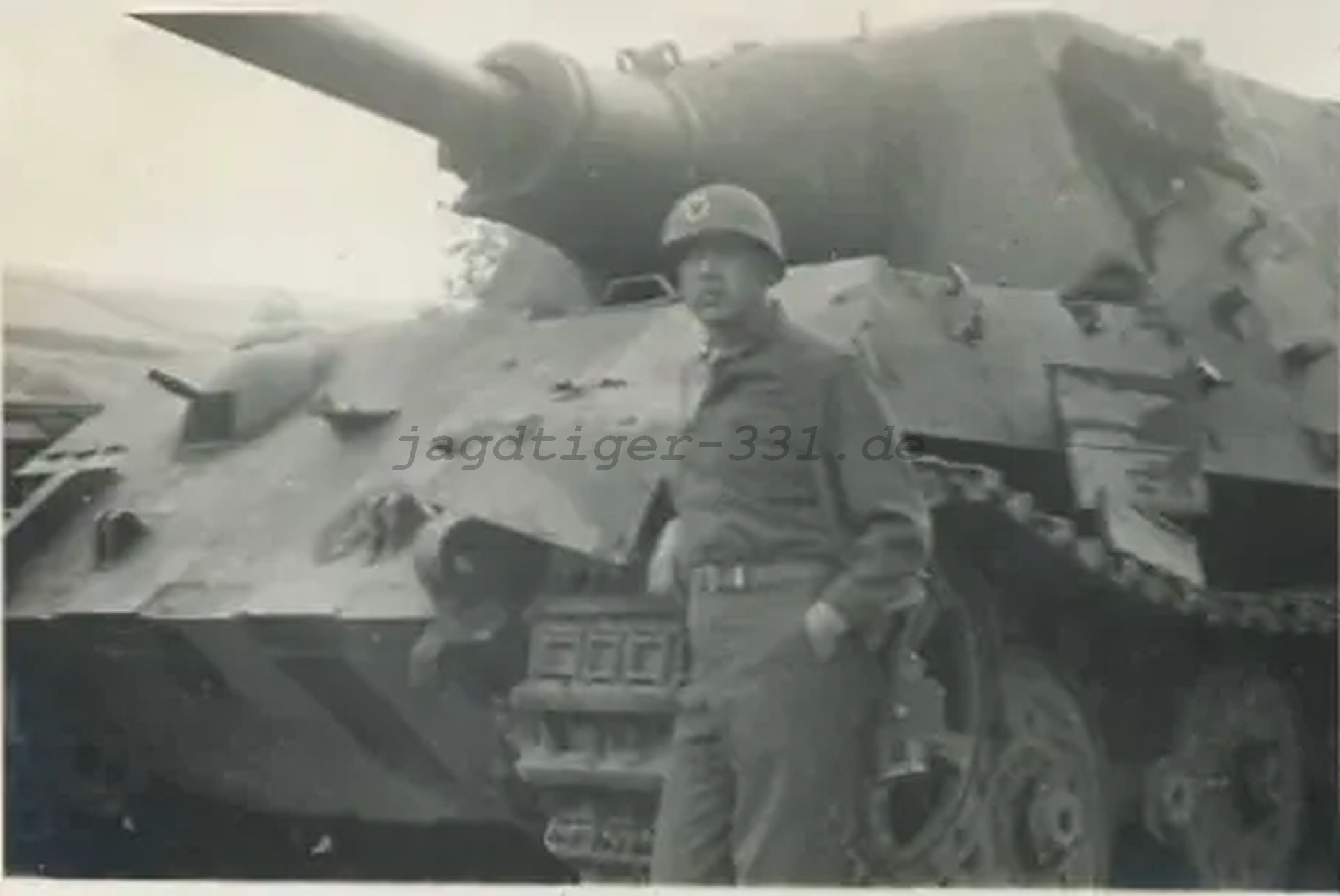
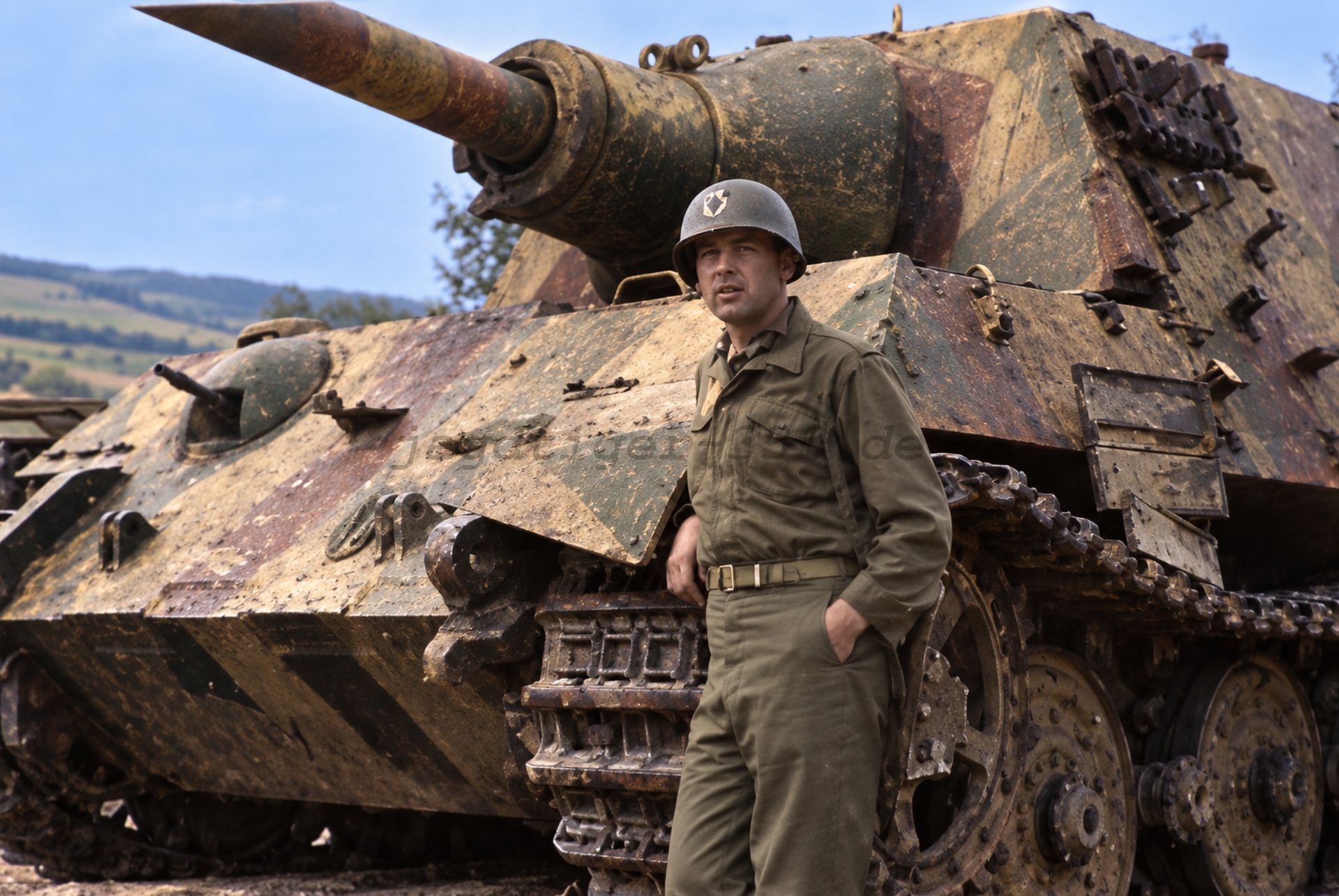
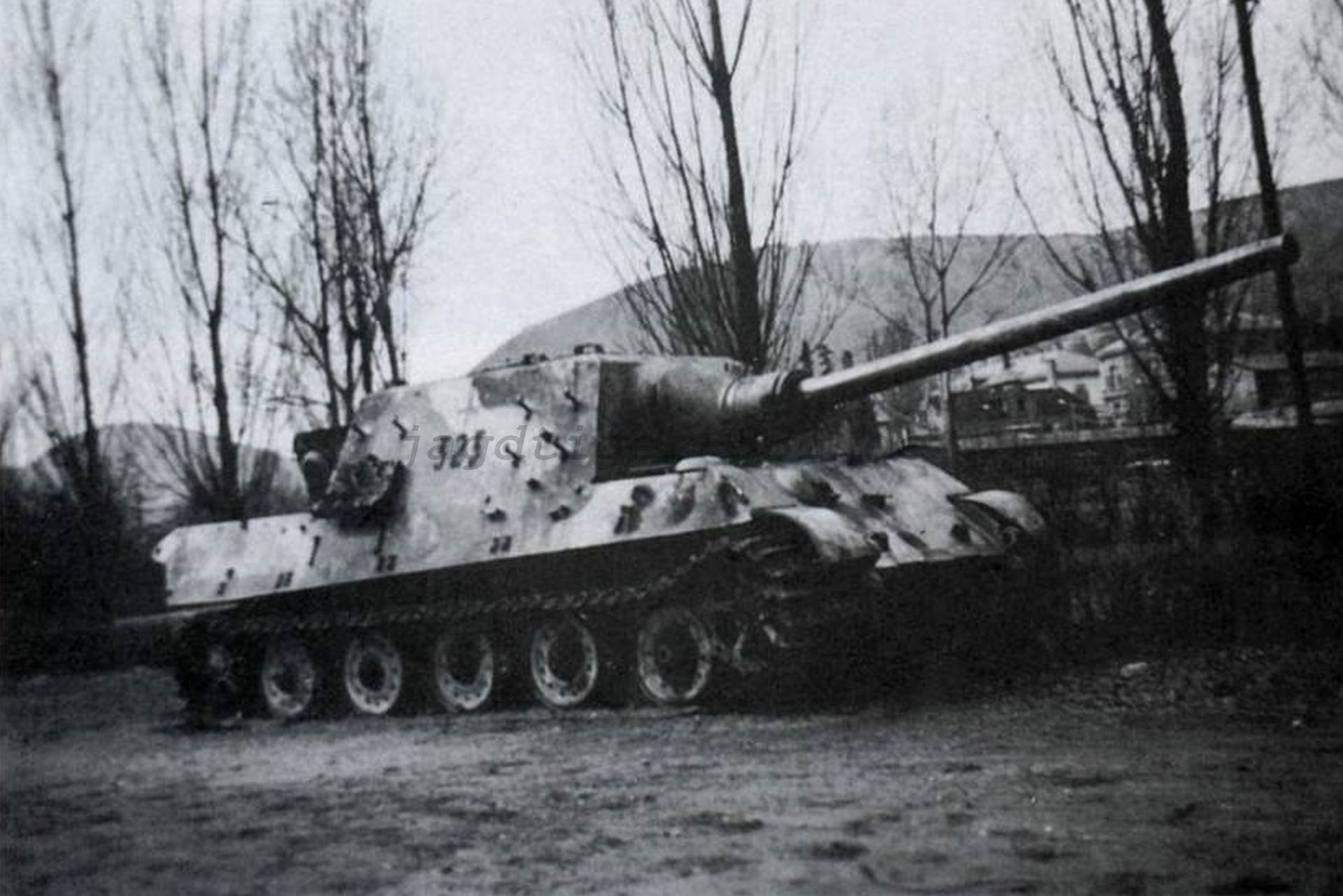
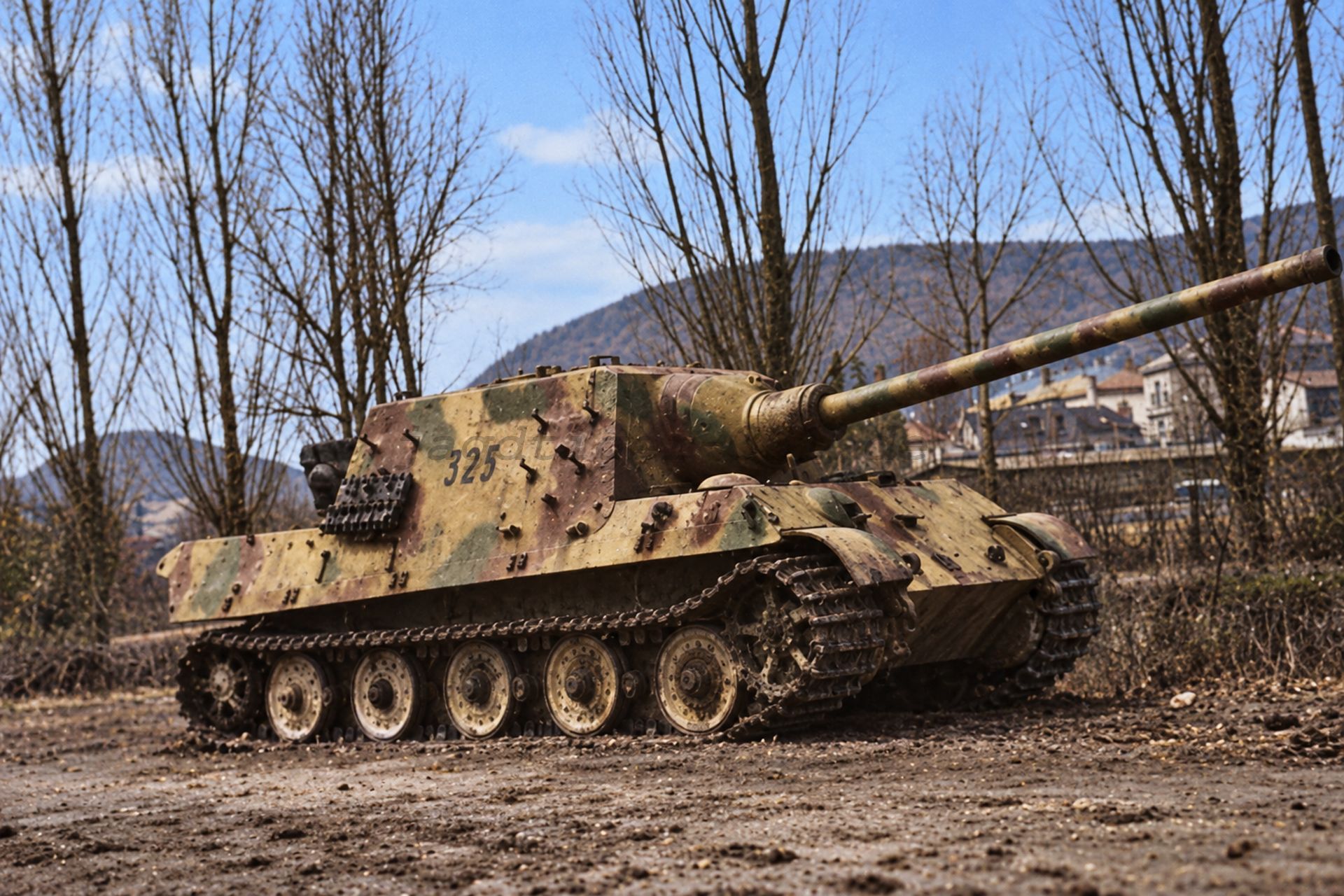
Jagdtiger 323 on the Festwiese in Neustadt. An exact date is uncertain; vegetation suggests late March 1945.
Sources
- Münch: German Heavy Anti-Tank Unit 653 in World War II
- Aykroyd: CCA 10th Armored Division from Trier to Landau, Fort Knox, 1948
- Bork: 47th Volks Grenadier Division (6 Jan – 31 Mar 1945), Historical Division Report
- Witzgell: 318th History, Month by Month
- Garthe & Weber: Das Kriegsende in der Pfalz – Rheinpfalz-Leser erinnern sich, 2005
- U.S. Army Headquarters, 80th Infantry Division: After Action Report, G-3 Section, March 1945
- Berzel: Neustadt an der Weinstraße, Ereignisse von 1870 bis Mitte des 20. Jahrhunderts
- Devey: Jagdtiger, Einsatz Kampf Technik